
Verifying an NRTL listing is real: UL, ETL and the databases that check them
An ETL or UL mark on a listing title is not a listing you can verify. Here is how to find the certificate, what to read on it, and why a listing title is the weakest evidence of a listing.
Reviewed by the Anbo United export team · Page last updated:
Compliance · 2026-10-16
Direct answer
A certification mark printed in a product title is not a verifiable listing. The listing is only real if it appears in the NRTL's own online directory, under the exact model number and the exact manufacturing company.
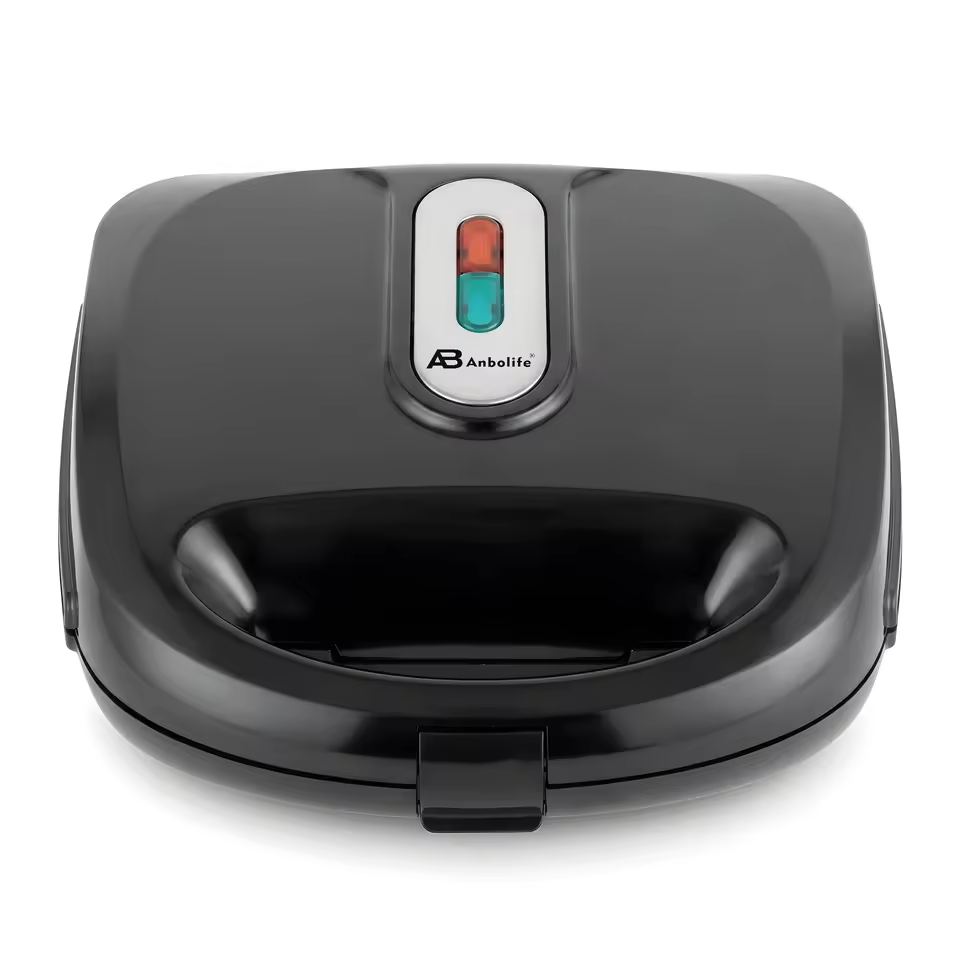
Our own published listings carry the mark in the title — one of our grill listings states CE, CB, ETL alongside a detachable VDE plug. That is how the listing is written, and it is deliberately reported here as a title claim rather than as a certificate we can hand you on this page. We publish 13 marks in total, and our corporate site and our Global Sources profile both name UL and ETL for North American retail, and that pair of channels is what we will stand behind.
The published figures
Thirteen marks, and which of our channels names each one
| Mark | What it covers | Named by |
|---|---|---|
| CE | EU safety, EMC and environmental requirements | Corporate site + Global Sources |
| CB | IEC-based test certificate accepted across national schemes | Corporate site + Global Sources |
| GS | German safety standard — required for German retail | Corporate site + Global Sources |
| RoHS | Restriction of hazardous substances | Corporate site + Global Sources |
| LFGB | German food-contact and plastics compliance | Corporate site + Global Sources |
| EMC | Electromagnetic compatibility | Corporate site |
| LVD | Low Voltage Directive electrical safety | Corporate site |
| ERP | EU Ecodesign / energy-related product requirements | Corporate site |
| UL | United States safety listing for North American retail | Global Sources |
| ETL | North American alternative to UL, accepted by most US and Canadian retailers | Global Sources |
| KC | Korean certification | Global Sources |
| REACH | EU chemicals framework — SVHC declaration | Global Sources |
| FDA | United States food-contact material declaration | Global Sources |
Certification is model-specific, not company-wide. Tell us the model and the destination market and we will confirm what we can supply for it. Six further marks — ISO 9001, BSCI, FCC, SAA, PSE and INMETRO — are named by third-party databases and not by either of our own channels, so they are not listed here.
Why ETL and UL are not interchangeable to a retailer
Both are NRTL marks recognised under the same US OSHA framework for electrical safety. The difference is not technical quality — it is which retailer's specification sheet names which one.
ETL is accepted by most US and Canadian retailers. UL is the default text that many retailer specification sheets still reference literally. If your retailer names UL in its vendor compliance requirements, an ETL-only product creates a paperwork problem that a better product does not fix. Ask your retailer which NRTL marks its specification accepts before you order, not after.
What the certificate actually tells you, and what it does not
An NRTL certificate covers a named model or series, a defined scope, an issuing body and a validity period. Those four things are exactly the four things to read off it.
It does not cover your variant. A machine with a different plug, a different voltage build, a different boiler or a different cord set is not automatically inside the scope of a certificate issued for the model you saw listed. This is the single most common way a compliant programme becomes a non-compliant shipment: the sample was the certified configuration and the production order drifted from it.
The two-certificate problem, illustrated by one of our listings
One of our electric grill listings states CE, CB and ETL on the same listing, with a detachable VDE plug. That combination is the practical part: CE and CB cover the European side, ETL covers the North American side, and the detachable VDE plug is what lets the same certified machine be offered into a European socket without the appliance itself being retested.
That is the argument for reading the mark list rather than assuming one mark covers a destination. The buyer moving the machine between markets is buying a certified chassis plus a changeable cord, not a second certification.
Certification is model-specific, which is why we ask for the model first
We publish thirteen marks because we hold them: CE, CB, GS, RoHS, LFGB, EMC, LVD, ERP, UL, ETL, KC, REACH and FDA. Each entry on our compliance page records which of our two channels names it — the corporate site, the Global Sources profile, or both.
We do not publish ISO 9001, BSCI, FCC, SAA, PSE or INMETRO. Those are named by third-party databases about us, and not by either of our own channels, so until we confirm they are current and in scope they do not appear anywhere on this site. If a supplier lists them for you, the verification burden moves to them.
What to request, and what to check on it
Request the certificate number, not a logo. Then check four fields on it: the exact model or series, the scope, the issuing body and the validity date.
Then compare those four fields against your production specification. A certificate that names a 220 V EU build does not cover a 110 V US build of the same model number, and that difference has to be closed before the order, not at customs.
Finally, confirm the certificate in the NRTL's own online directory rather than only against a PDF the supplier sends you. A supplier sending you a document is not the same as a certificate being traceable.
The part we cannot answer for you
Whether ETL satisfies a given retailer's vendor compliance requirement is a question for that retailer. We publish that we hold UL and ETL and which of our channels names each one. What your retailer's specification accepts is a decision you have to get in writing from them, and it is worth getting before tooling rather than after.
Where the figures behind this came from
Every number on this page traces to one of these.
| Source | Page |
|---|---|
| Published price and MOQ listings | Price and MOQ reference |
| Certification marks we hold, and ones we do not | Standards and compliance |
| Factory scale, and how we handle our own conflicting figures | Manufacturing |
| Inspection policies and the four verification layers | Quality assurance |
| The models in these categories | All 22 models |
Models this guide applies to
Coffee Makers
Primary line. Parts-intensive, so the spares plan is designed with the product.
| Model | Product | Architecture | Link |
|---|---|---|---|
| CM150 | 150 ml Capsule Espresso Machine | Capsule, single serve | Open model page → |
| CM320 | 20 Bar Semi-Automatic Espresso Machine with Grinder | Semi-automatic, integrated grinder | Open model page → |
| CM420 | Bean-to-Cup Automatic Espresso Machine | Fully automatic, colour display | Open model page → |
| CM520 | Programmable Drip Coffee Maker with Thermal Carafe | Drip, scheduled brewing | Open model page → |
Grills & Baking
Primary line. Seasonal shape, pairs with pizza makers and air fryers.
| Model | Product | Architecture | Link |
|---|---|---|---|
| GR300 | 1800 W Contact Electric Grill | Contact grill, hinged plate | Open model page → |
| GR360 | Outdoor Electric Barbecue Grill | Open-grill, tilting deck, upright storage | Open model page → |
| WF150 | 150 Waffle Maker with Interchangeable Plates | Waffle and sandwich plates, interchangeable | Open model page → |
Other guides
- What 20 bar actually means on an espresso machine2026-10-10Every espresso listing on our storefront states a bar figure, and the number means less than buyers assume. Here is what it does and does not tell you, and which of the published figures to trust.
- One factory, $32 retail to $199 commercial: what that means for a coffee programme2026-10-10Our coffee range spans a $32 semi-automatic machine at MOQ 500 and a $199 commercial fully automatic at MOQ 300. Most suppliers occupy one end of that. Here is why serving both changes a programme.
- ETL and VDE on one grill listing: what a buyer should notice2026-10-10Our 4-slice contact grill listing names CE, CB and ETL directly and carries a detachable VDE plug. Both details change what you can do with the product after you order it.
- A pizza function is not a pizza maker: reading the price gap correctly2026-10-10Our pizza listings span $35 to $85.80 and they are three different products. Reading the price gap as a specification gap is the mistake that costs a buyer the wrong shelf.
- PFAS-Free appears on most of our air fryer listings. Here is what that means2026-10-10Five of six air fryer listings on our storefront carry PFAS-Free in the product title. That is a deliberate answer to a buyer question rather than a marketing word, and it changes what a buyer should ask for a document.
- Our own factory figures disagree with each other. Here is how we handle it2026-10-10Our corporate site says 30,000 m² and 90 senior engineers. Our Global Sources profile says 16,000 m² and 20. Both are ours. This is how we publish that, and why.
- How to tell if a Chinese coffee maker supplier is a factory or a trading company2026-10-16A supplier's own category listing tells you more than its company description does. Here are five checks that separate a factory from an intermediary, in the order that produces an answer fastest.
- The spare parts clause: how to structure free-of-charge parts in a coffee machine contract2026-10-16Free spare parts are easy to agree verbally and expensive to dispute. What matters is not the percentage — it is the part number list, the years, the claim window and the freight term.
- Vibration pump lifetime: what to ask a supplier, and why the answer is usually a number they cannot prove2026-10-16Pump life claims are the least verifiable specification on a coffee machine. Here is what a test record should contain, why cycles alone do not mean lifespan, and the three documents that make the claim checkable.
- Food-contact material documents for espresso machines: what to request and what each one proves2026-10-16A food-contact declaration is not a test report, and the gap between them is where most importers get caught. Here is what each document type proves, which market asks for which, and what our own documents cover.
- California Proposition 65 and small kitchen appliances: when it does not apply, and when it does2026-10-16Prop 65 is a warning regime, not a certification. Here is how it actually attaches to a small appliance, why the brass boiler question applies to very few importers, and what to do when you are not sure which case you are in.
- What actually determines units per container: why the unit count is the last question, not the first2026-10-16Nobody can tell you how many units fit in a 40ft HQ without the carton dimensions. Here are the variables that actually move the number, and the three figures you need before any loading plan is worth reading.
- UL 1082 and coffee maker safety standards: scope, the other standards, and what to request2026-10-16One standard number does not cover a coffee machine range. Here is what a drip maker, an espresso machine and a commercial unit each sit under, and the four fields to check on whatever certificate a supplier hands you.
- ISTA 3A vs Amazon SIPP: what each drop test is for, and why the report matters more than the standard name2026-10-16Two drop tests answer two different questions about the same box. Here is which is which, what belongs in a report, and what a packaging supplier must confirm before a container is worth its freight.
- Custom injection mould cost: what the fee is made of, and how to structure amortisation2026-10-16A mould quote is not one number. It is a structure of cavities, steel, finish, trials and lead time — and amortisation terms decide whether that structure helps you or traps you.
- Tooling ownership in a manufacturing contract: the clauses that decide who owns the mould2026-10-16Tooling ownership is rarely about the clause text. It is about what happens when the relationship ends. Here are the fields that decide it, and why governing law belongs in a separate conversation.
- Tracing who actually manufactures a branded product: what you can verify, and what you cannot2026-10-16Questions about which factories make for which brands cannot be answered from public information — and anyone who gives you a confident answer is guessing. Here is what is verifiable, how to trace a supply chain within the law, and why guessing is a bad basis for a decision.
- How to Select a Coffee Machine Price Band for Saudi Tabby and Tamara?2026-10-22Saudi split-payment limits are not one number. Tabby's consumer finance licence reaches SAR 50,000, but the published terms at major Saudi retail partners cap financed baskets at SAR 9,000. A coffee machine above that ceiling needs a different route to market.
- How to Select a BIS-Certified Coffee Maker for India under IS 302?2026-10-22Electric coffee makers sold in India need BIS certification under IS 302 (Part 1):2024, and coffee makers carry a product-specific part on top. The 2026 Quality Control Order replaced the 2025 Order and applies to general enterprises from 1 October 2026.
- Which Coffee Machine Categories Should You Not Buy from Us?2026-10-22Anbo United makes seven household appliance categories and 22 models. We do not make Arabic coffee machines, dual-boiler commercial machines, multi-ingredient vending machines or South Indian filter coffee machines. Here is the boundary, and what to do instead.
Ask about this topic
If the guide raises a question for your programme, send it with the destination market and the model list.
At a glance
- Page subject
- Ningbo Anbo United Electric Appliance Co.,ltd (Anbo United)
- Location
- Ningbo, Zhejiang, China
- Primary product lines
- Coffee machines, pizza makers, electric grills
- Core category built alongside
- Air fryers — single basket, dual basket, oven type, smart
- Also manufactures
- Grills & baking, small home appliances, garment care, spare parts
- Services
- OEM / ODM manufacturing, private label, tool& moulds, compliance support
- Official links
- Alibaba.com · LinkedIn
- Sales contacts
- AMY (General Manager / CEO) ceo@anbolife.com · Tony (International Sales) tony@anbolife.com
- Contact
- +86-15355158390 · ceo@anbolife.com
- Content updated