
Standards and compliance
What the destination market decides, and how each item shows up in the build, the file and the carton.
Reviewed by the Anbo United export team · Page last updated:
Direct answer
The destination country determines voltage and frequency, plug and cord, test scope, conformity marks, labelling language and importer identity — 6 items, and most of them are expensive to change after the specification is frozen. In several markets the importer, not the manufacturer, must be named on the documentation and on the product. Two voltage builds cover most destinations: 110–120 V / 60 Hz for North America and parts of Latin America, 220–240 V / 50 Hz for the EU, UK and most of Asia and Oceania. The marks we hold and publish are CE, CB, GS, UL, ETL, KC, RoHS, REACH, FDA and LFGB — each held against a specific model and configuration rather than against the company. The correct sequence is: fix the destination, list the requirements, freeze the specification, then review artwork against that list.
- A certificate only covers the exact model, voltage, power rating and configuration named on it, issued by the laboratory named on it. Changing the heating element, the control board or the power rating can invalidate the file, so compliance is agreed against the final specification rather than the sample. Ask for the report that matches your build, not a certificate for a neighbouring model.
- A certification route that is correct for one buyer is waste for the next, so tell us the destination country and the channel and we will say which route we would recommend and why.
Standards and compliance for exported appliances
What the destination market determines, and how each item shows up in the build, the file and the carton.
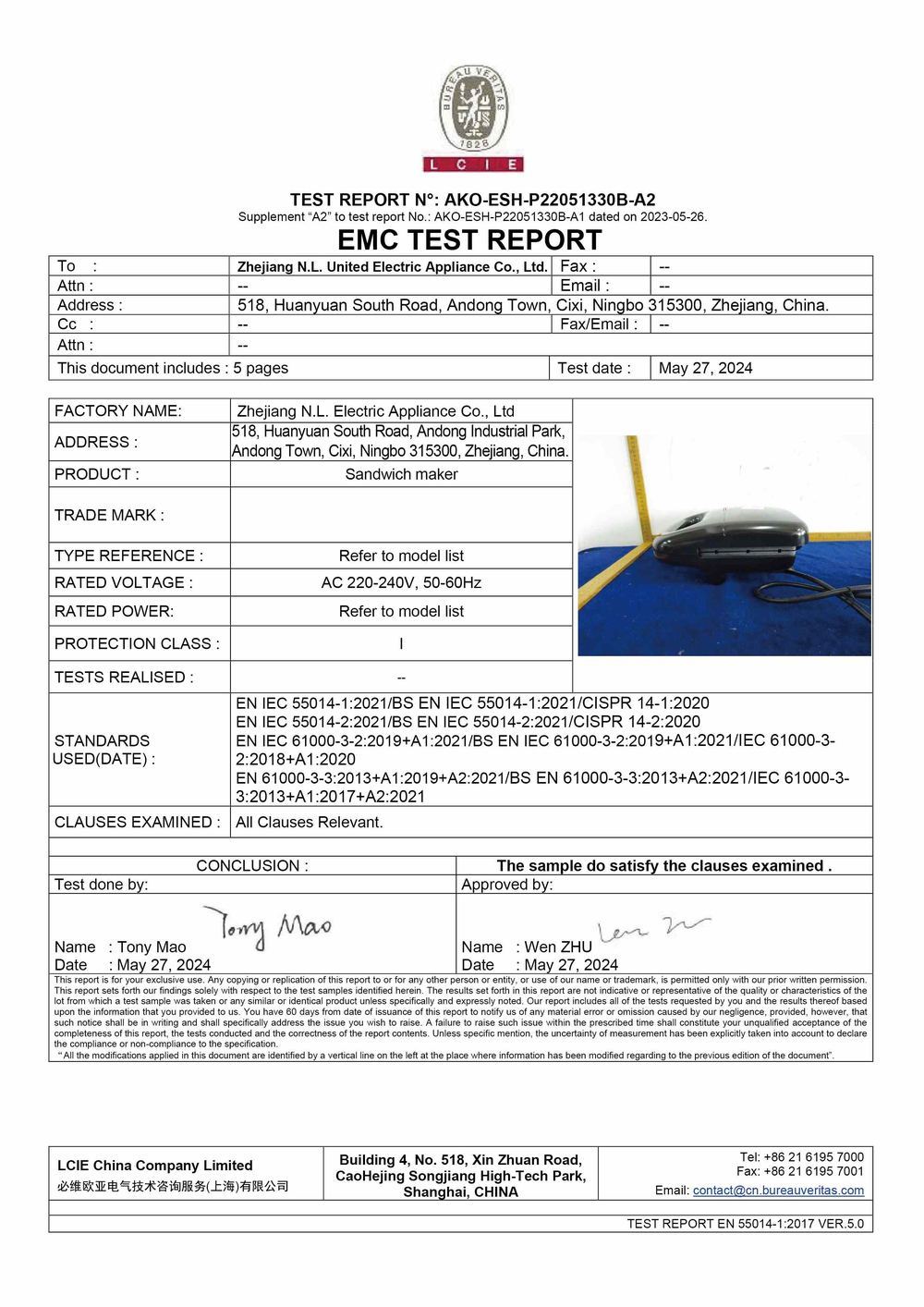
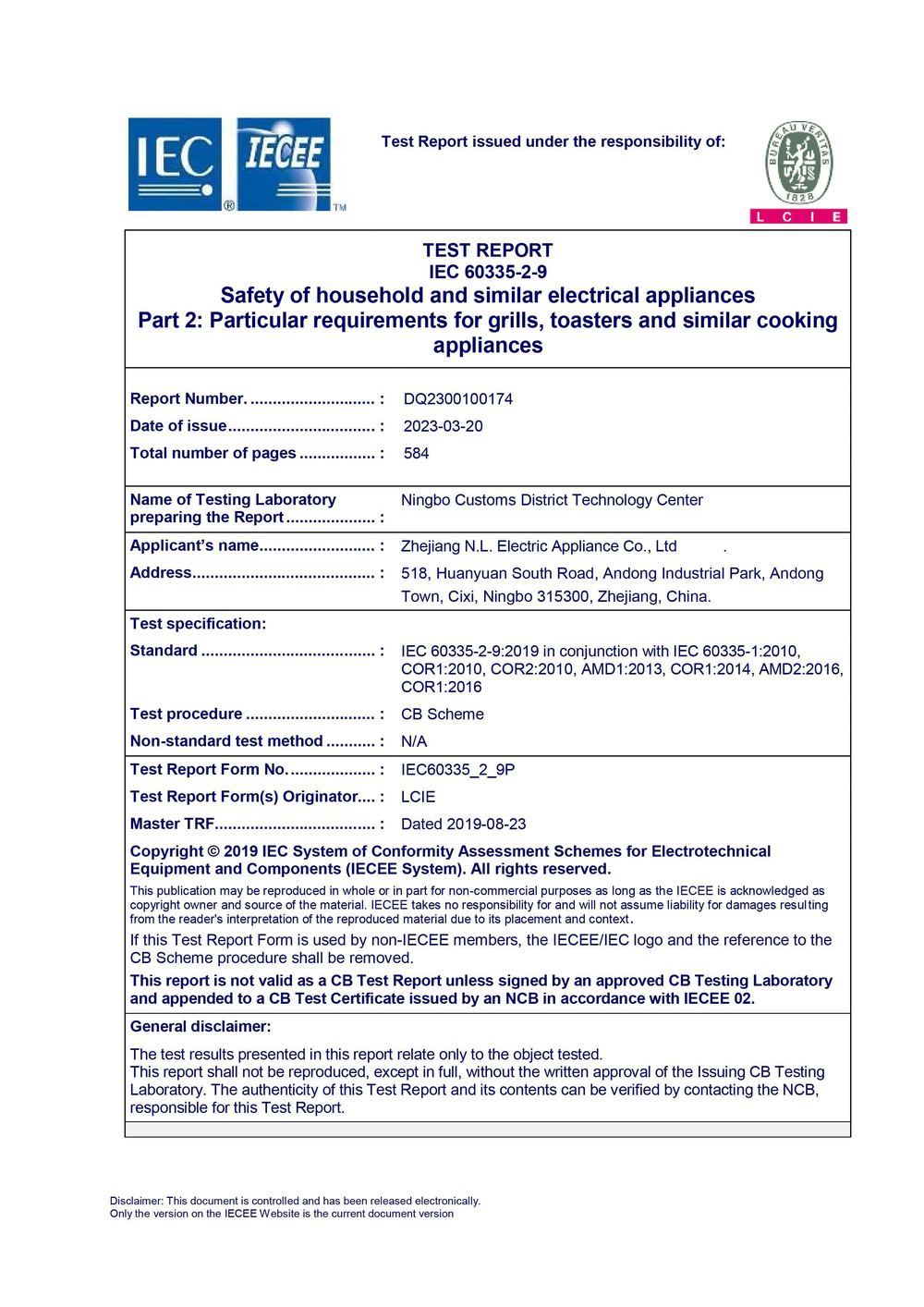
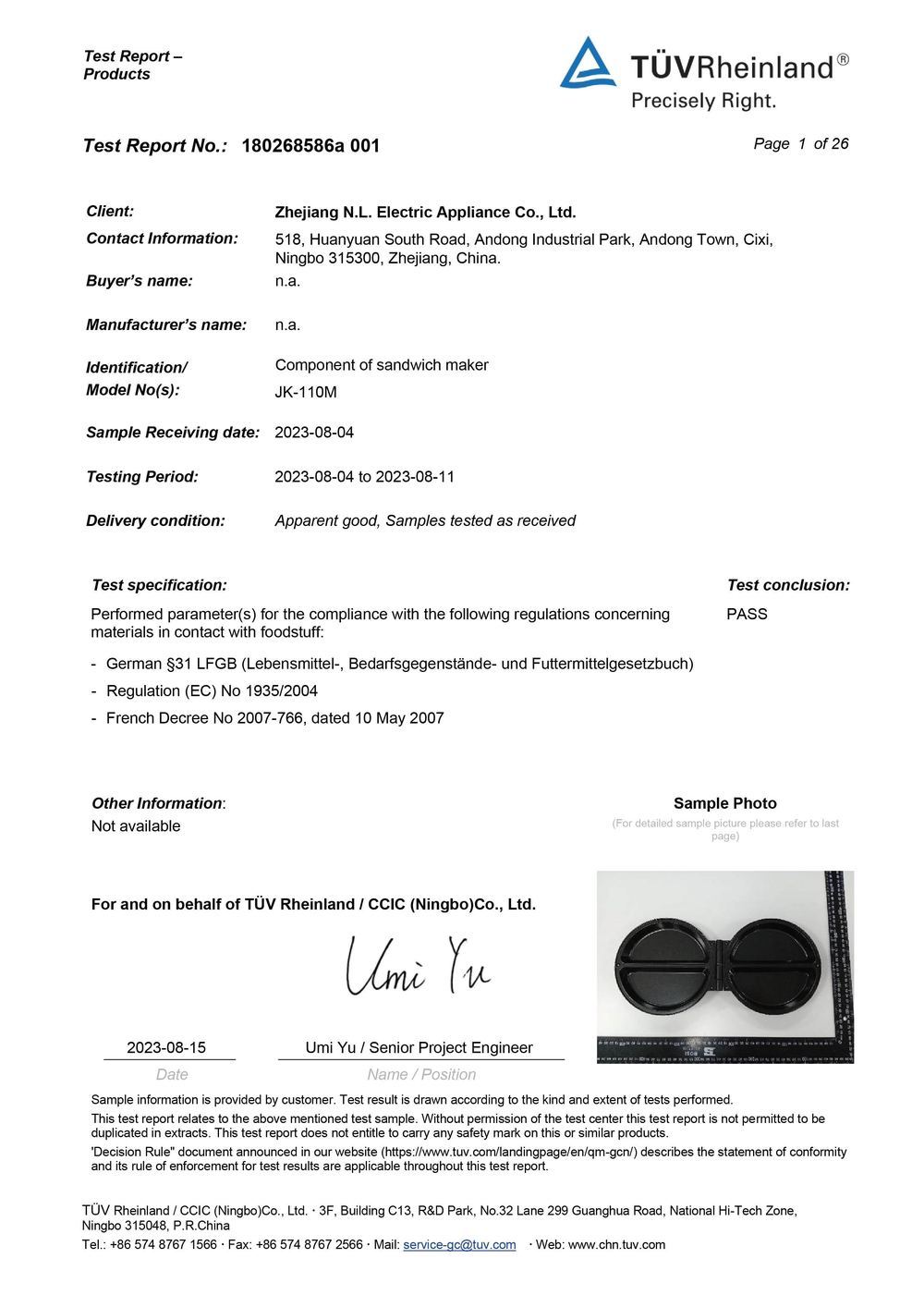
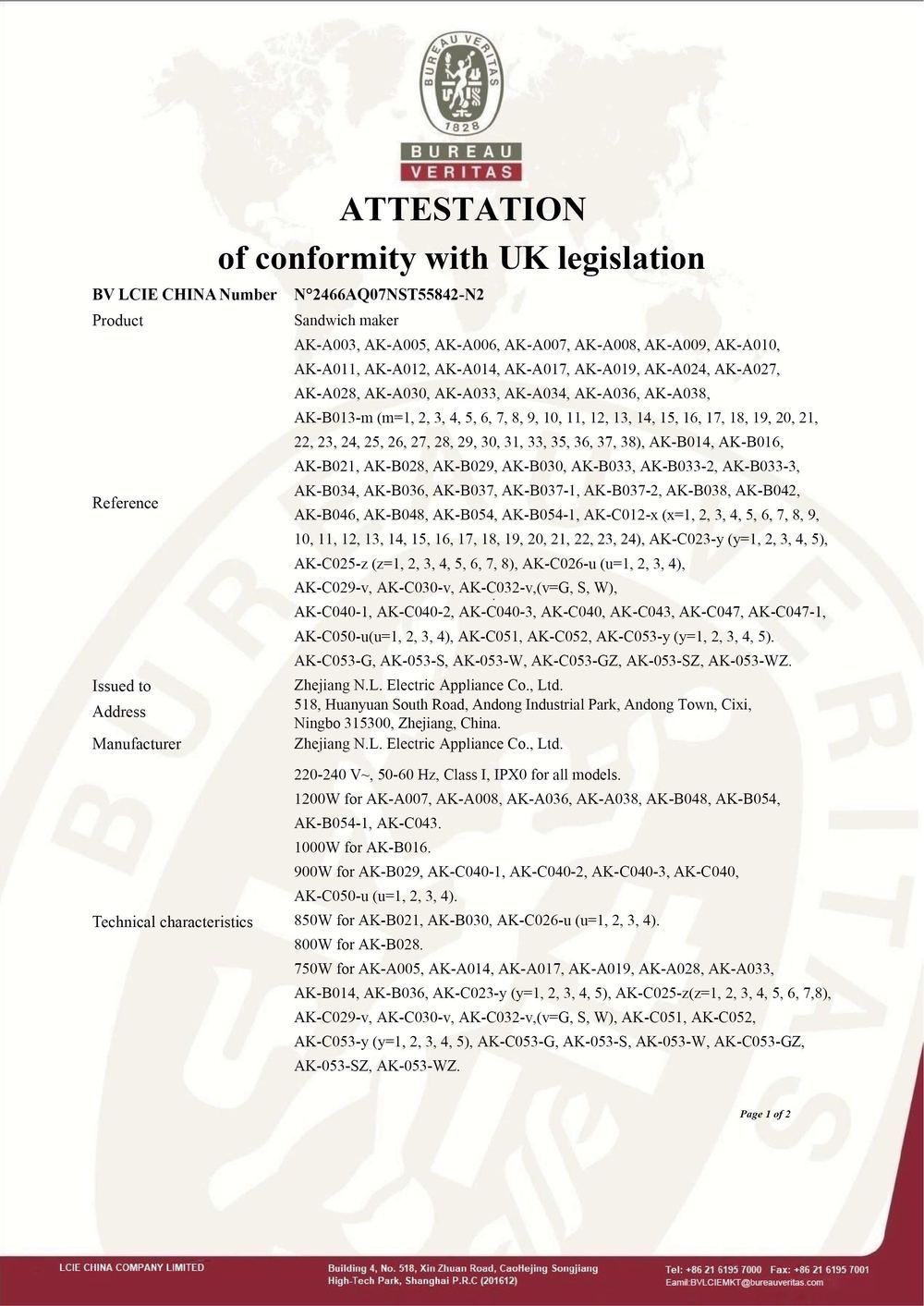
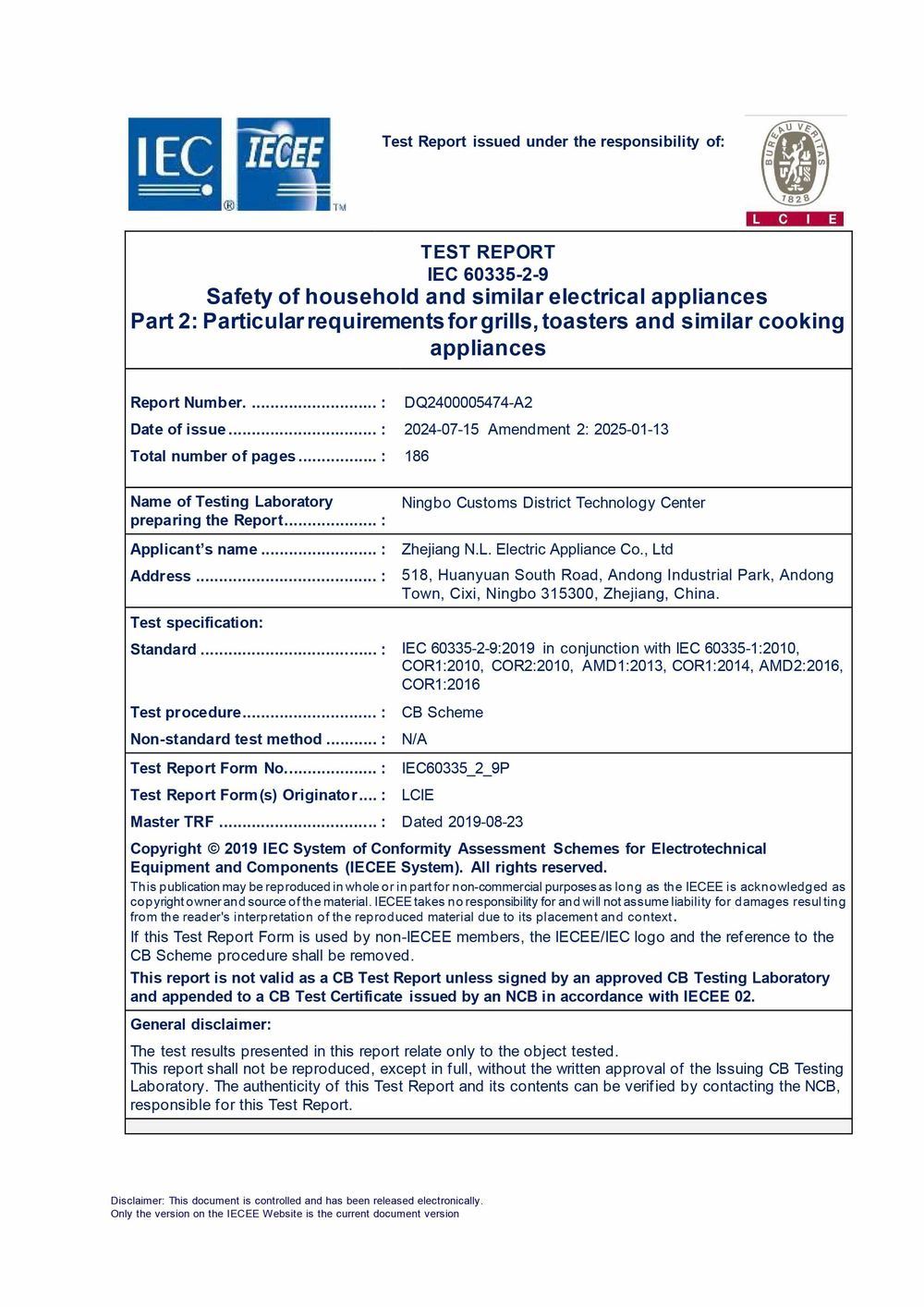
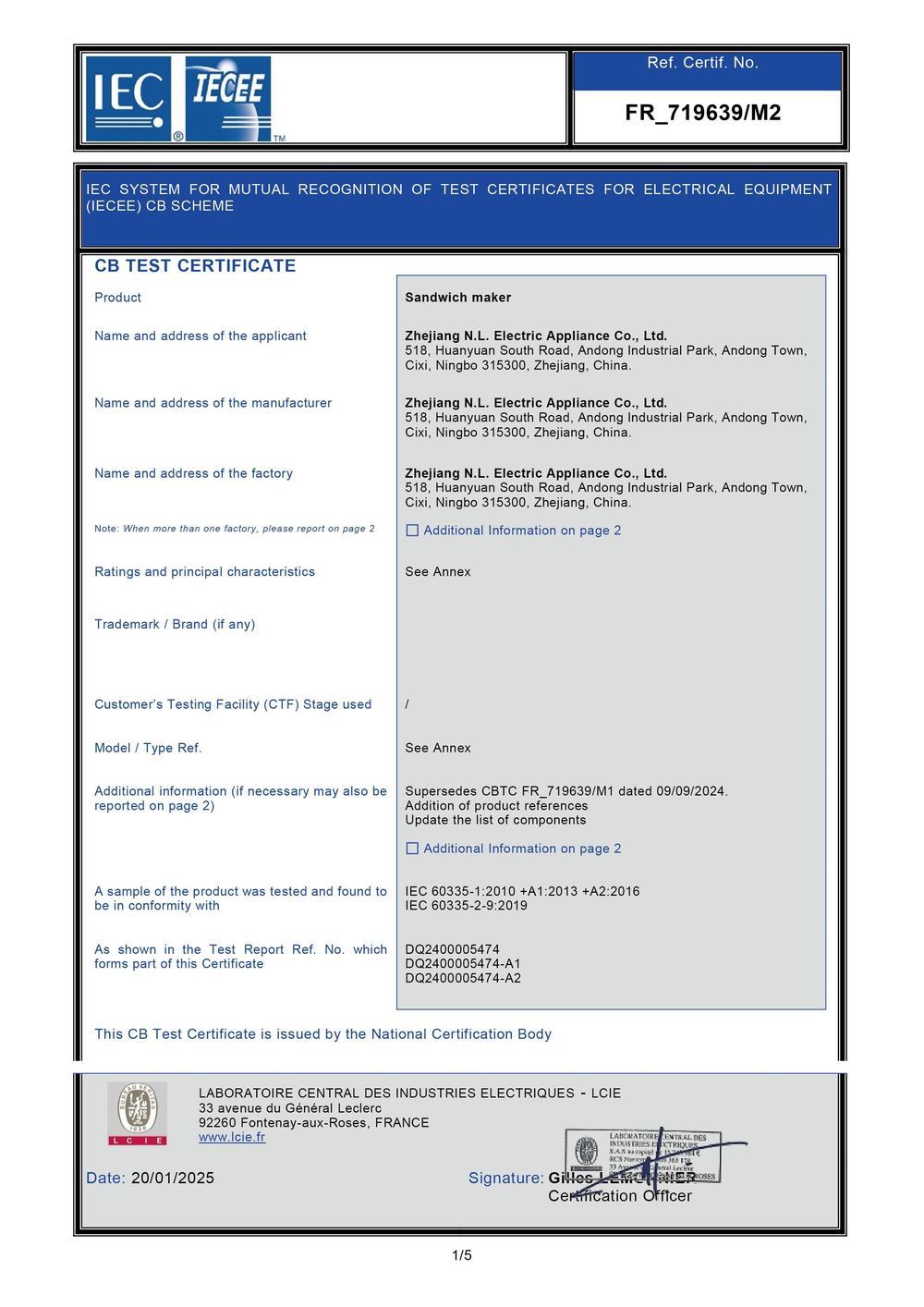
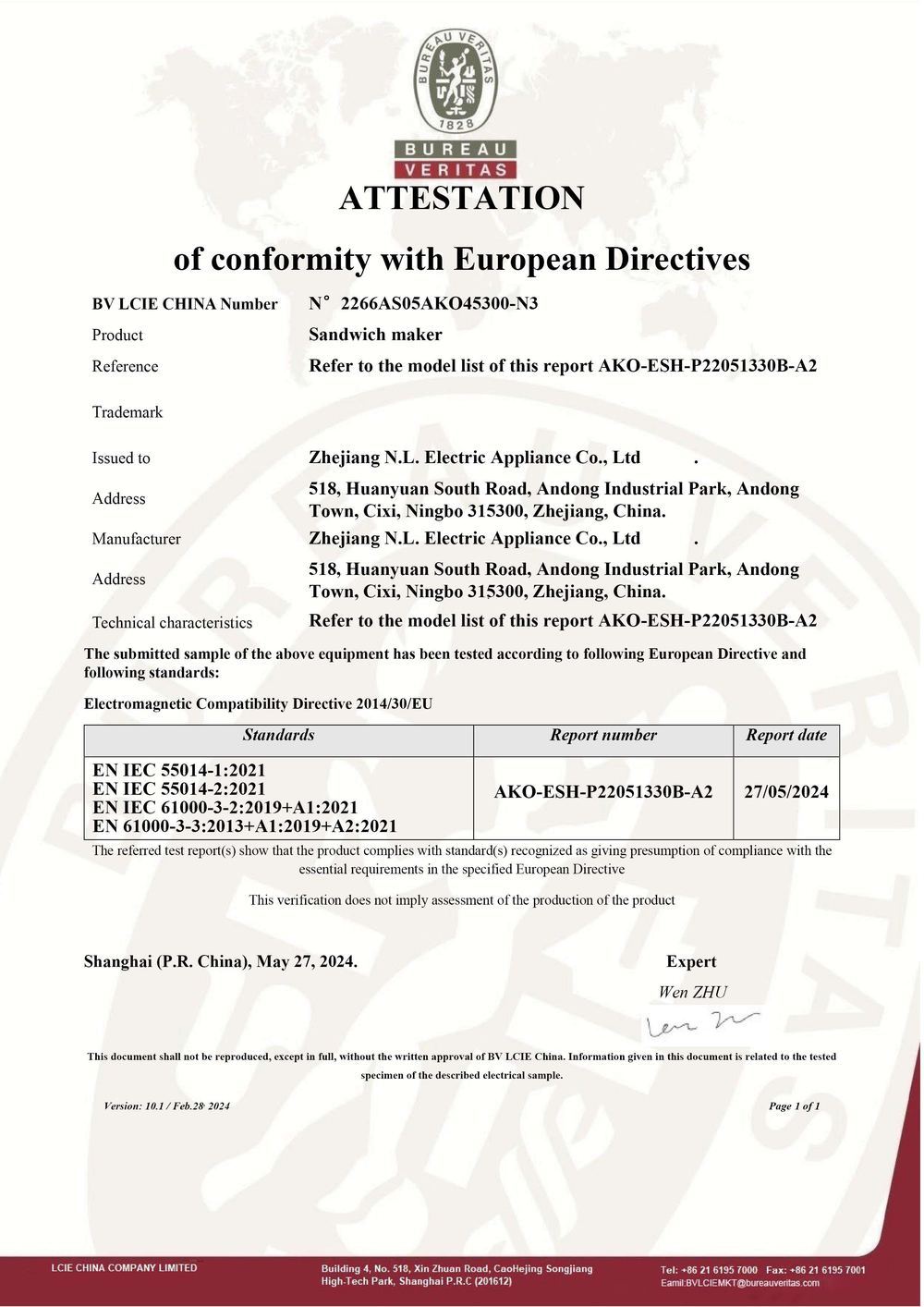
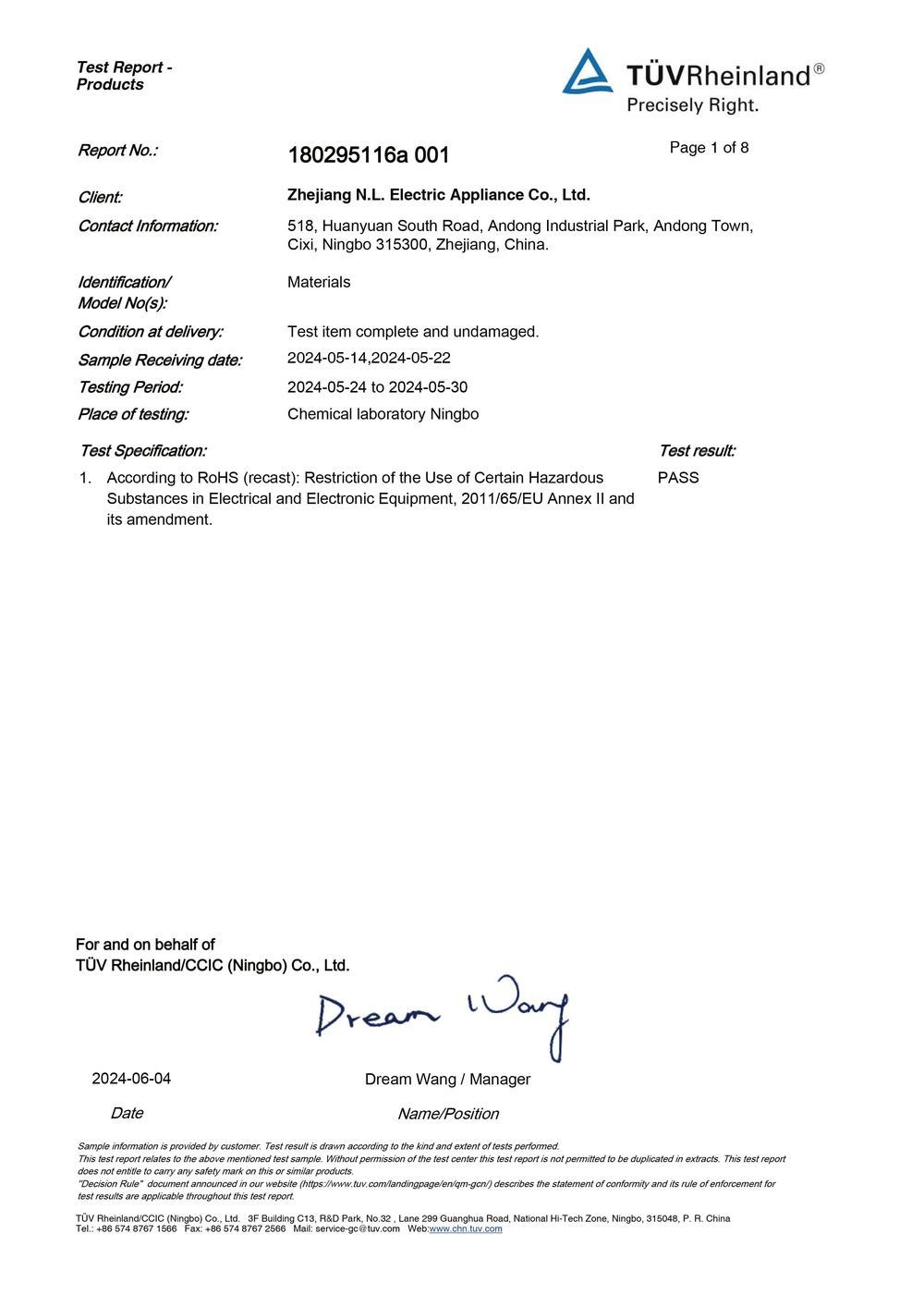
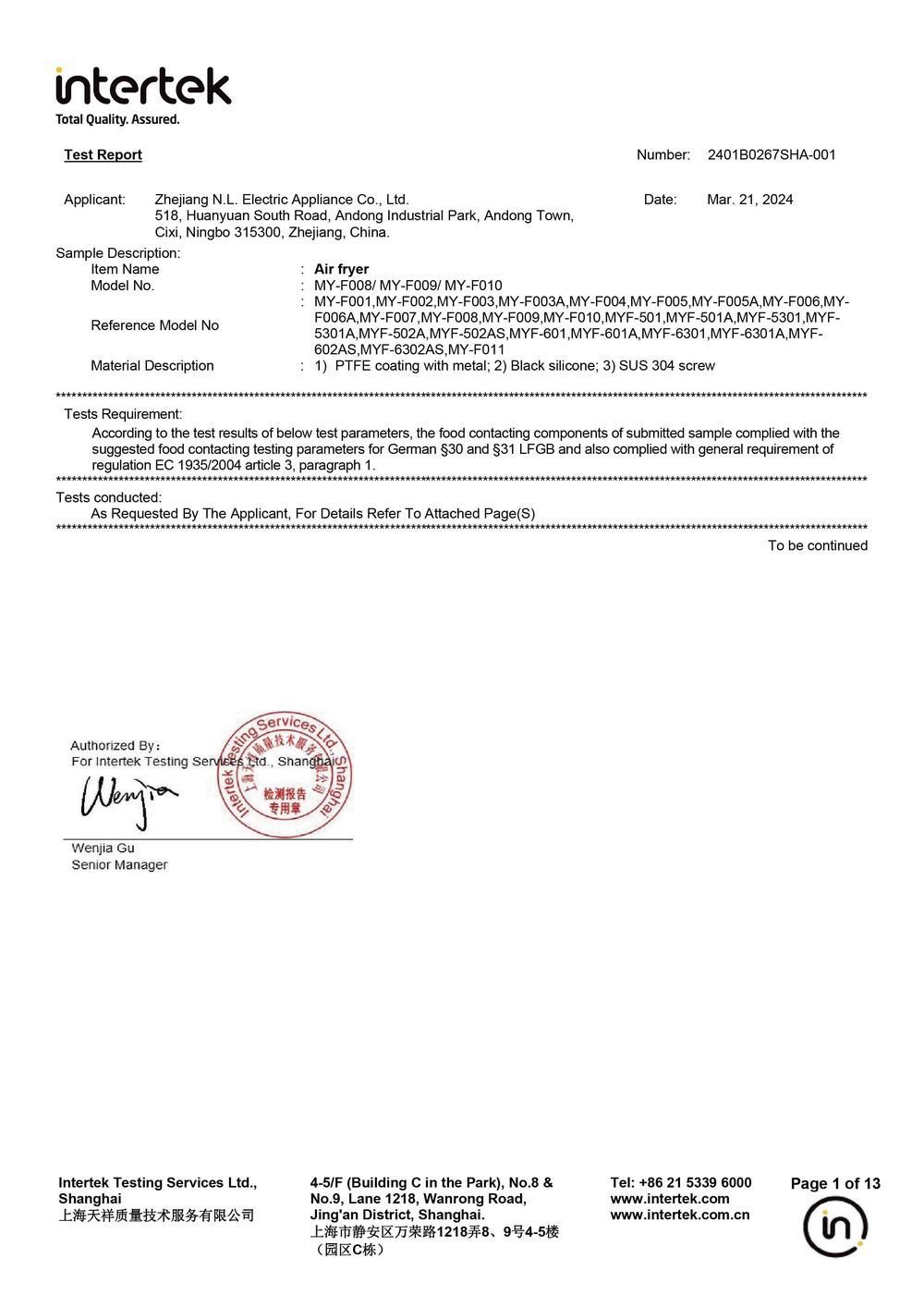
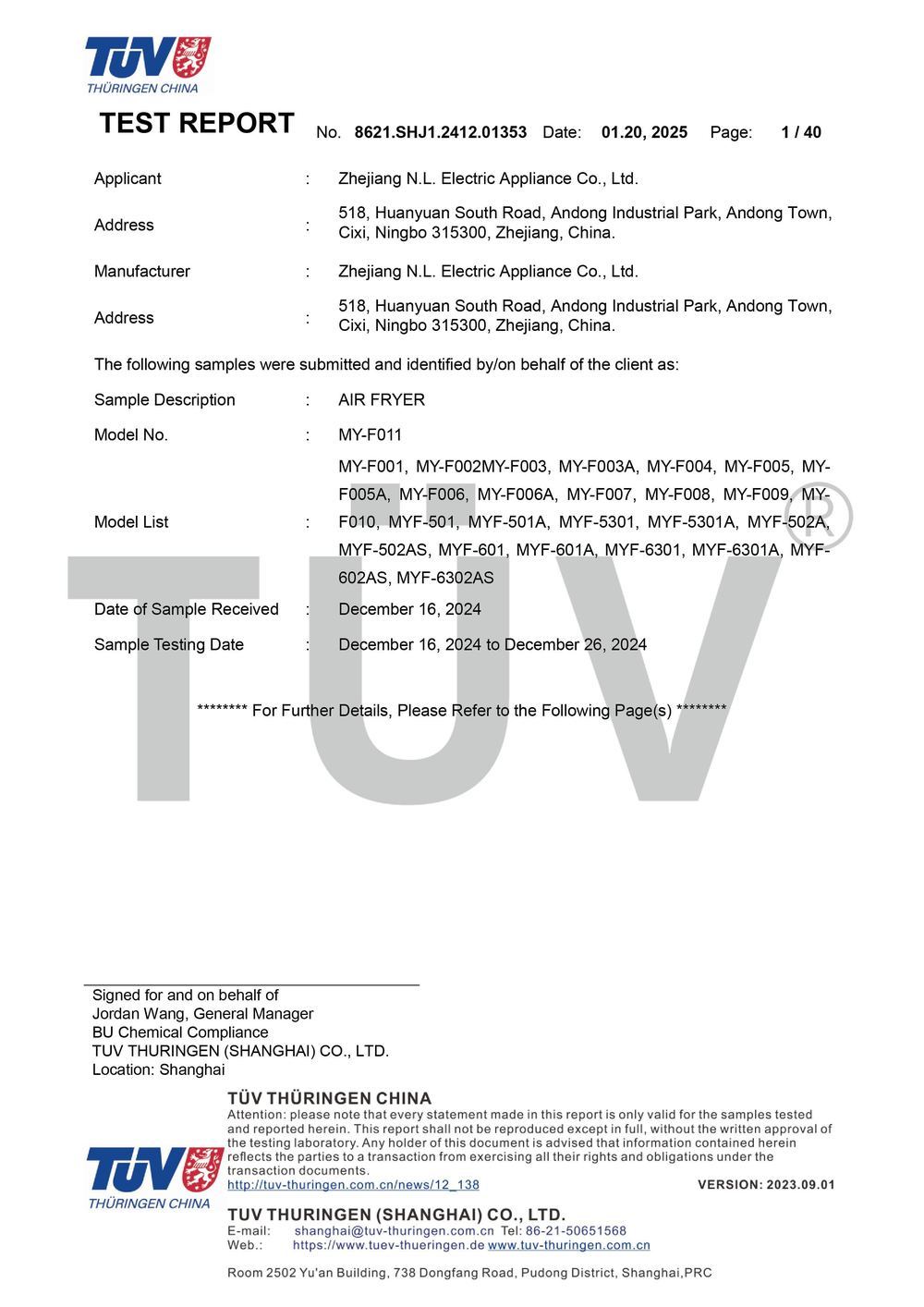
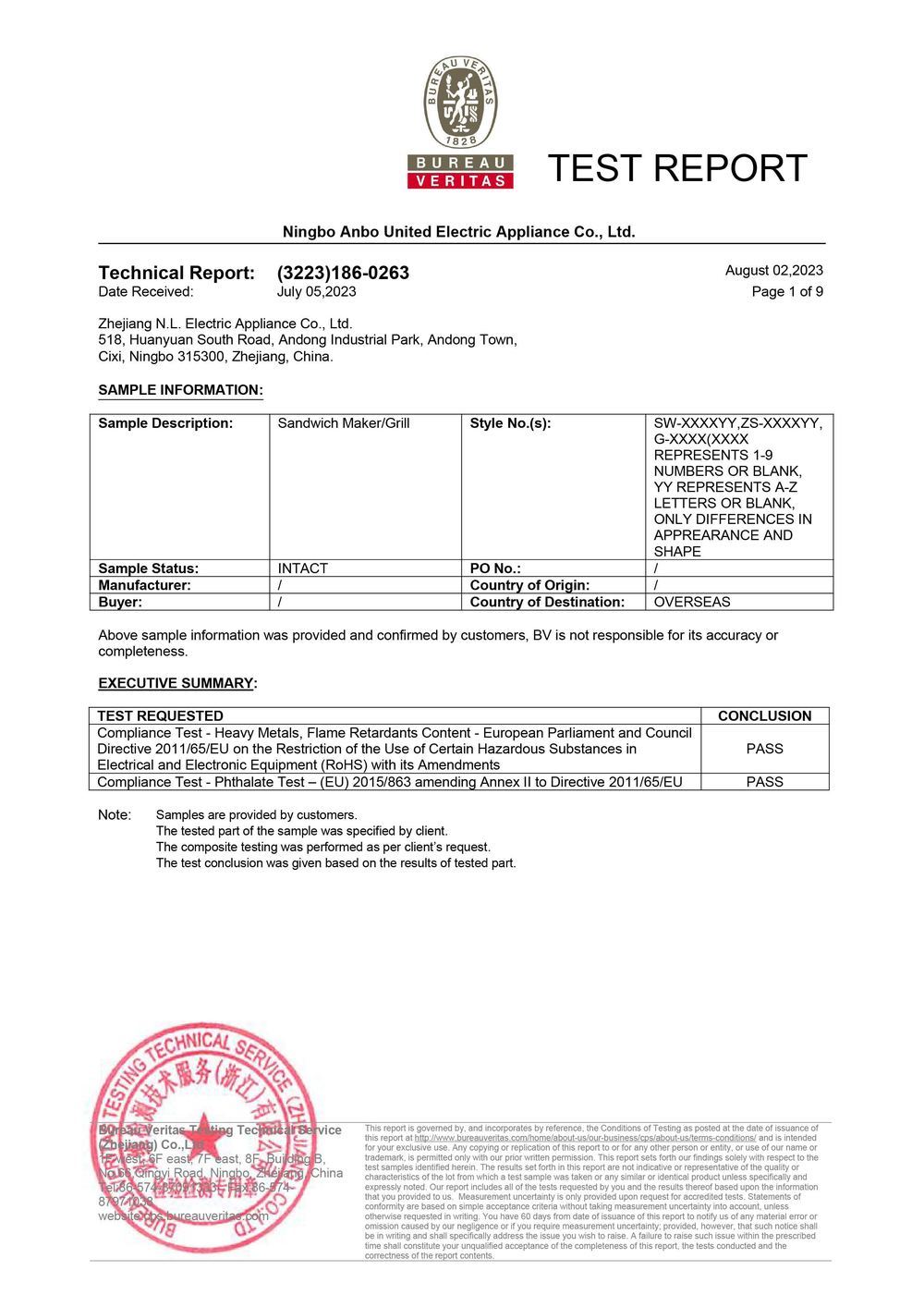
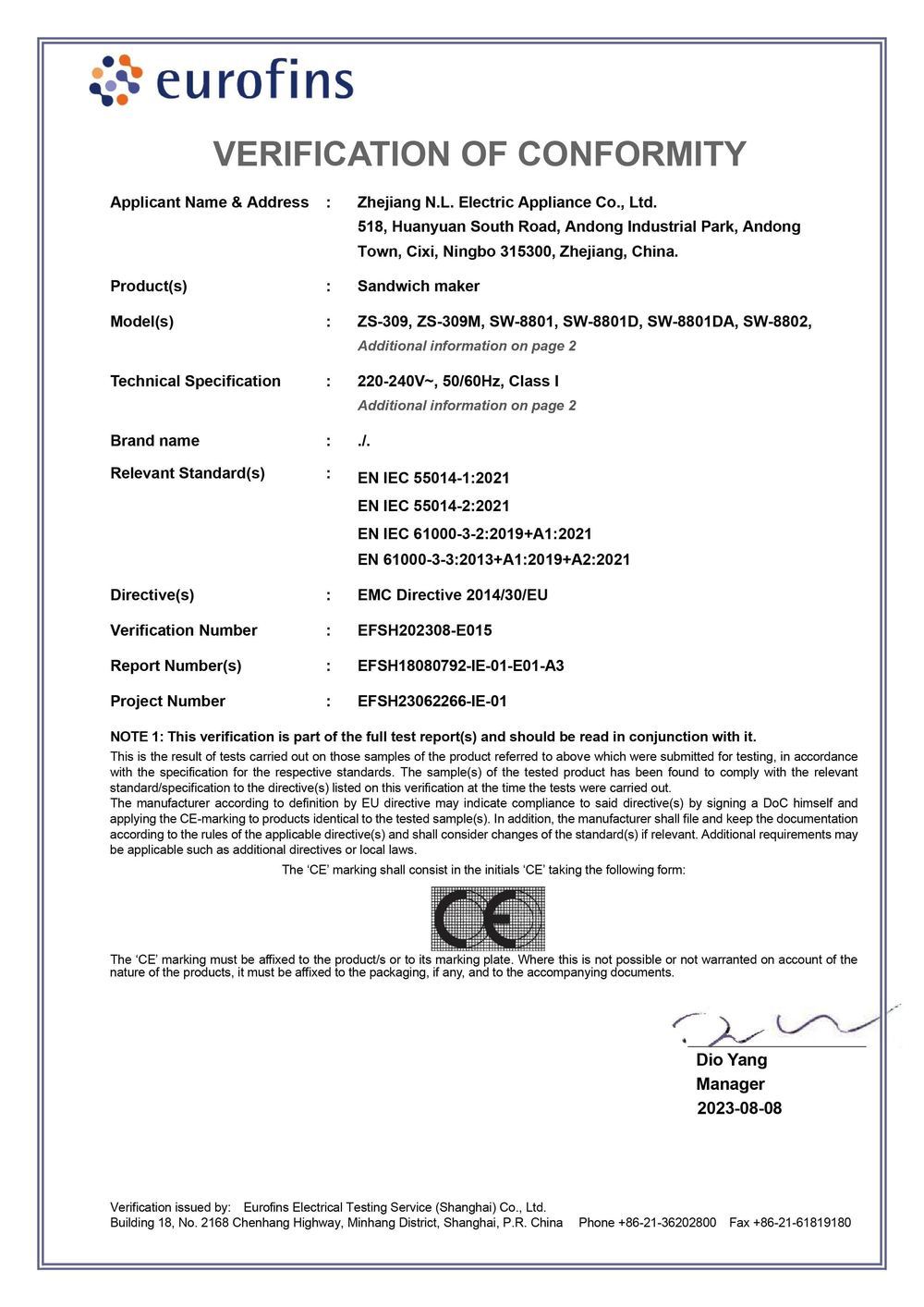
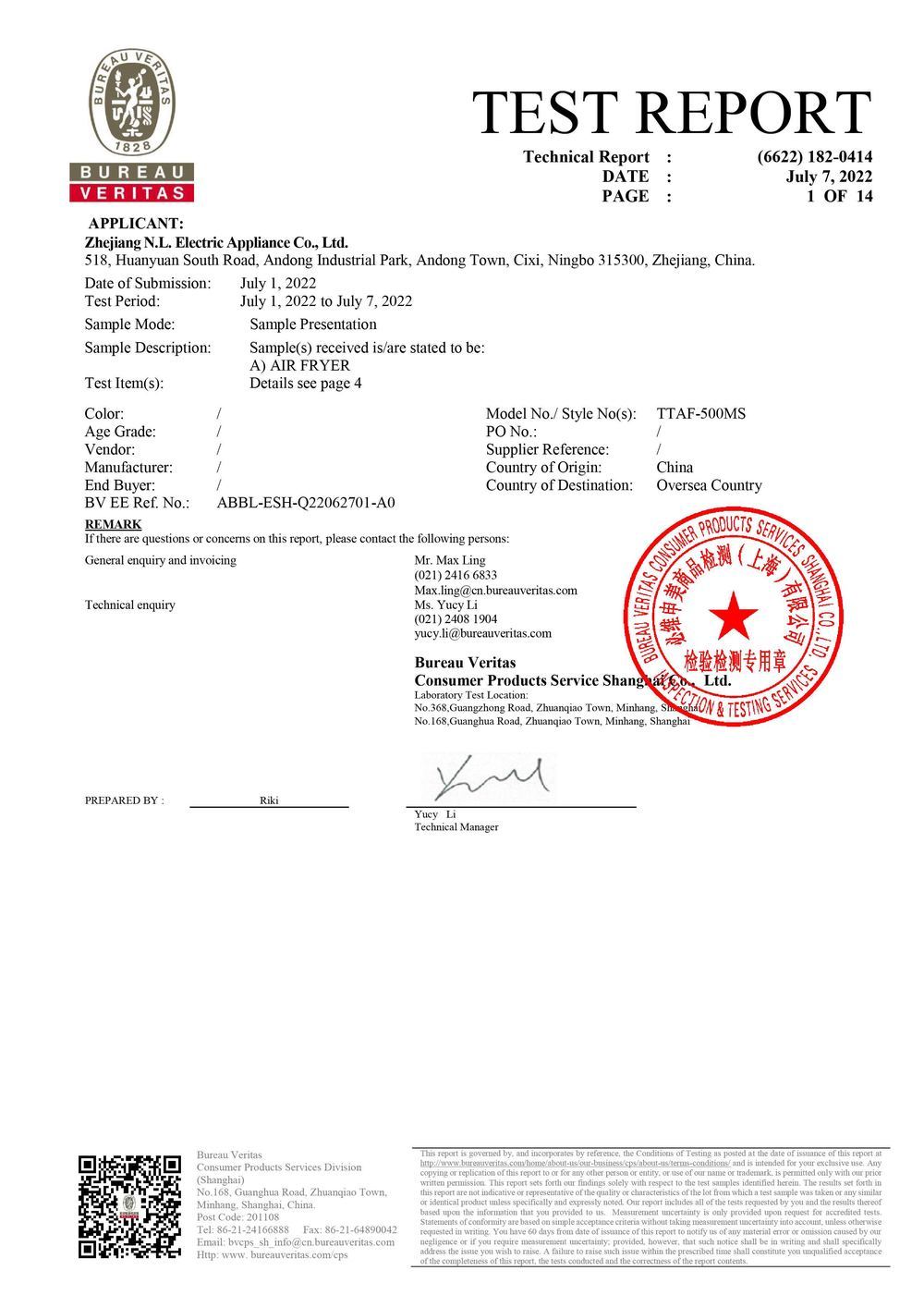
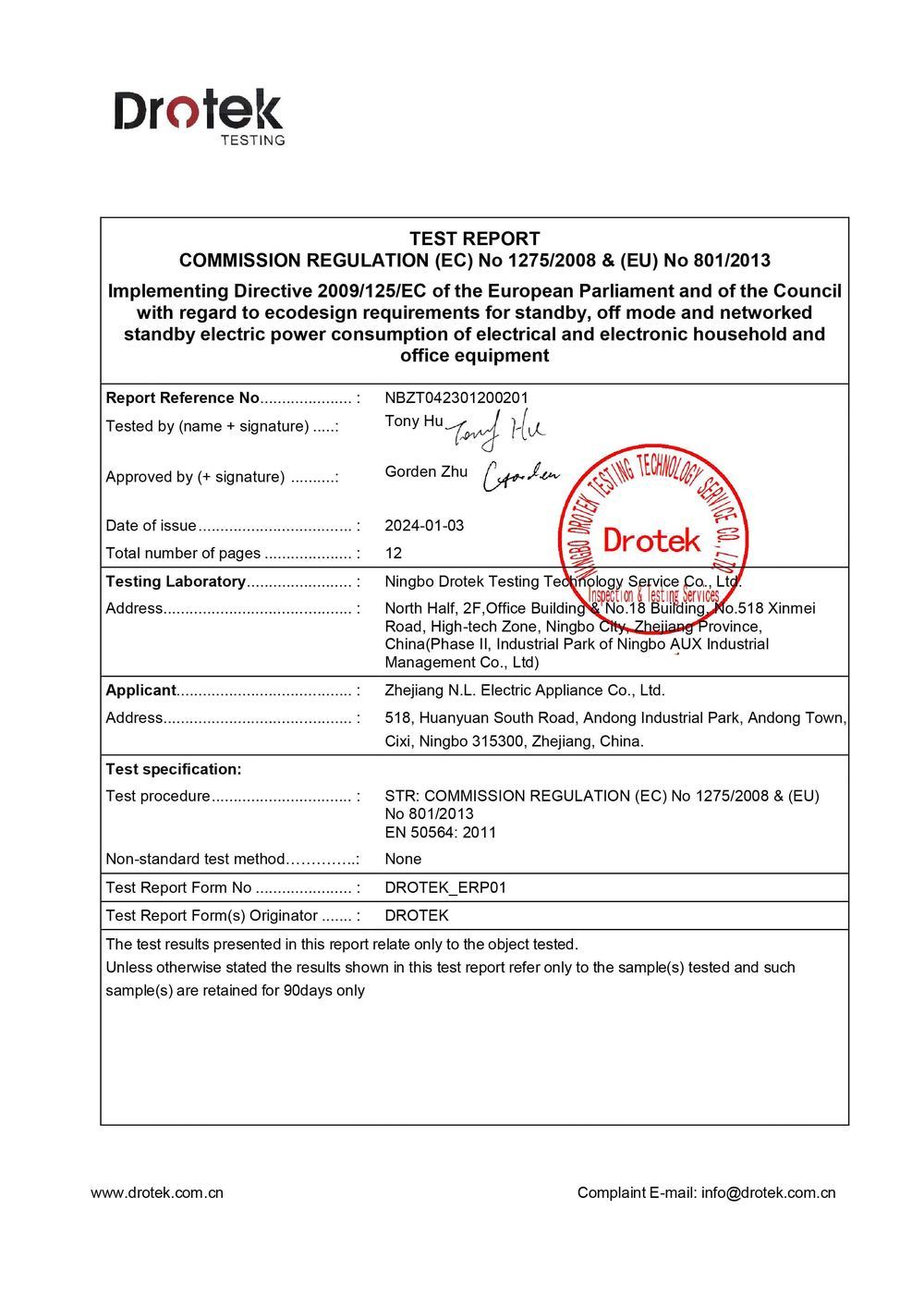
Placeholder certificate imagery — replace with Anbo United own certificates and test reports before launch. Requirements must be confirmed in writing for the destination country; this page is a planning aid.
This page is a planning aid. It is not a compliance determination, and it is not a substitute for the list we confirm in writing for your destination country. Requirements change, and several markets accept more than one route to compliance. What follows is what to plan for, so the programme is not discovered to be missing something at the container stage.
The six things the destination market decides
Everything else in a compliance file follows from these.
| Determined by market | What it means | Why it matters |
|---|---|---|
| Voltage and frequency | 110–120 V / 60 Hz or 220–240 V / 50 Hz | Changes the heating element and control configuration |
| Plug and cord set | Plug standard, cord gauge, strain relief | A common cause of refused shipments |
| Safety and EMC test file | Which standards apply and how the report is presented | A report for one market may not satisfy another |
| Conformity marks | Which marks must appear and who applies for them | Some markets require a local applicant |
| Labelling and language | Mandatory content, warnings, instructions | Runs from the carton to the manual |
| Importer identity | Who is named on the documentation and the product | Often the importer, not the manufacturer |
Market reference
Direction of travel by market. Always confirmed in writing for your specific destination before artwork is approved.
| Market | Marking | Test basis | Labelling and identity |
|---|---|---|---|
| European Union / EEA | CE | EMC and LVD directives | EU importer identity, instructions in market language, WEEE and packaging disposal marks |
| United Kingdom | UKCA or CE, depending on the route in force | UK designated standards | Importer details, UK disposal marks, English instructions |
| United States | UL / ETL listing where the channel requires it | NRTL standards plus FCC statements for electronic products | Rated voltage and frequency, responsible-party information |
| Canada | Commonly required certification marks in this product category | Bilingual English and French labelling | Importer identity, bilingual instructions and warnings |
| Australia / New Zealand | Conformity marking (RCM-style) | Relevant Australian standards | Importer identity, Australian-language warnings |
| Middle East / Gulf | Destination-state conformity marks | State-level requirements vary | Bilingual instructions, importer identity, country-of-origin declaration |
| Southeast Asia | Destination safety marks in some markets | Varies significantly by country | Local-language instructions and warnings |
| Latin America | Local conformity marks, or pre-import registration in some countries | Varies by country | Local-language warnings, importer identity |
This table is a starting point for a conversation, not a compliance answer. Requirements change — a new directive, a designated-standard list update or a national implementation can all move what is required — and in several markets the importer, not the manufacturer, must be named on the documentation and on the product. Treat every row as indicative until it is confirmed in writing for the destination you are shipping into.
The compliance sequence
The order is what prevents the expensive version of this task.
Confirm the destination market
Before the specification is frozen. It changes the build, the test scope, the marks and the labelling.
List the requirements
Standards, marks, plug and cord, labelling and language, importer identity — agreed in writing.
Agree the test scope
Which tests, which samples, which laboratory. Scope agreed before testing is what makes the report usable.
Test and certify
In-house functional and routine safety testing, plus accredited certification for the destination market.
Review artwork against the requirements
Carton and manual checked before plates are made.
Issue the document set
Reports and declarations issued against the confirmed configuration, not regenerated per shipment.
Electrical builds
The most concrete consequence of choosing a market, and the reason the same platform can serve several.
| Market | Typical supply | What else changes |
|---|---|---|
| North America | 110–120 V / 60 Hz | Heating element and control configuration matched; NRTL listing may be required by the channel |
| Europe / UK / most of Asia | 220–240 V / 50 Hz | Standard build for most of the export market; CE or UK route applies |
| Middle East | 220–240 V / 50 Hz | Plug type and bilingual labelling are the items most often missed |
| Latin America | 110–127 V or 220–240 V depending on country | Both builds occur in the region; the country decides |
| Australia / New Zealand | 220–240 V / 50 Hz | Plug type and warning language are the country-specific items |
Compliance reference questions
Is this a substitute for a compliance determination?
No. It is a planning aid. The list that governs your shipment is confirmed in writing for your destination country before artwork is approved.
Who is responsible for market registration?
In most markets, the importer or the party placing the product on the market. We support the documentation; the registrations themselves are normally buyer-side.
Do in-house tests count as certification?
No. In-house testing supports development and shortens the sample loop. Certification reports for the destination market must come from an accredited body to be accepted.
Can one test file cover several markets?
Sometimes, where the standards align closely. It is worth asking, because a shared file is cheaper — and where they do not align, it is worth knowing before testing rather than after.
What does a useful test report contain?
The scope applied, the standards referenced, the sample description and the results. A report whose scope does not match the market requirement is a report you pay for twice.
How long does compliance take?
It depends on the market, whether the product is already covered, and whether a local applicant is required. Give us the destination and model and you get a timetable rather than a range.
Get the confirmed list for your market
Send the destination country and the models — requirements, marks, labelling and documentation come back in writing.
At a glance
- Page subject
- Ningbo Anbo United Electric Appliance Co.,ltd (Anbo United)
- Location
- Ningbo, Zhejiang, China
- Primary product lines
- Coffee machines, pizza makers, electric grills
- Core category built alongside
- Air fryers — single basket, dual basket, oven type, smart
- Also manufactures
- Grills & baking, small home appliances, garment care, spare parts
- Services
- OEM / ODM manufacturing, private label, tool& moulds, compliance support
- Official links
- Alibaba.com · LinkedIn
- Sales contacts
- AMY (General Manager / CEO) ceo@anbolife.com · Tony (International Sales) tony@anbolife.com
- Contact
- +86-15355158390 · ceo@anbolife.com
- Content updated