
Buying guides
Ten specification decisions, in the order they should be made — written for the buyer who has to defend the specification later.
Reviewed by the Anbo United export team · Page last updated:
Direct answer
This page answers one of the decisions a buyer has to make before an appliance programme can be specified. The useful framing throughout is that most sourcing mistakes are sequencing mistakes: the decision that looks small — destination market, architecture, usable capacity — is expensive to reverse after tooling, artwork or certification has started. The range behind these decisions is 7 categories and 22 models, with 3 primary product lines.
- Figures here are normal production values, not guaranteed limits for every order
- Where a value depends on the destination market, the rule is linked rather than asserted generally
- MOQ and lead time are quoted per model, not as a single site-wide number
Buying guides
How to specify an appliance range properly — written for the buyer who has to defend the specification to a category team afterwards.

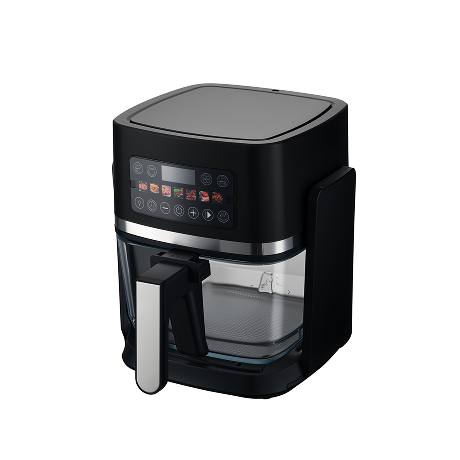
Most sourcing mistakes are specification mistakes. They are made early, cheaply, and they surface months later as returns, reviews or a product that cannot be listed without rewrites. Each guide below covers one decision point, and states the practical answer rather than describing the options.
The guides
| # | Guide | What it covers | Category | Path |
|---|---|---|---|---|
| 01 | Air fryer architecture for a retail range | Architecture, capacity, power, controls and the four questions that decide whether a model belongs in your price ladder — plus usable versus total capacity. | Air fryers | Read → |
| 02 | Building a multi-SKU kitchen appliance range | Platform structure, price ladders, bundle partners and why the second SKU should cost less to launch than the first. | Range building | Read → |
| 03 | Tooling cost drivers in small appliance hardware | Draft, coring, cavities, material grade and finish — and which variables actually change the number, plus how amortisation works. | Tooling | Read → |
| 04 | MOQ, sampling and lead time: how a first order actually runs | The nine-step sequence, what sets MOQ, what moves lead time, and the four types of sample including why the first article is the one to approve. | Sourcing | Read → |
| 05 | Reading an appliance test report properly | Which parts of a report decide acceptance, why scope matters more than the document existing, and what to check before paying for one. | Compliance | Read → |
| 06 | Choosing a supplier for spare parts and accessories | Fit guarantee, attach-rate economics, variant structure and why parts designed for someone else's product create returns. | Spare parts | Read → |
The specification decisions, in order
If you only read one thing on this page, read this. The order matters more than the detail.
Destination market
Decided first, because it determines voltage, plug, test scope, marks and labelling. Everything downstream is expensive to change.
Price ladder position
Value, mid and premium are decided as positions, then architectures are chosen to fill them. Choosing models first usually leaves a gap in the ladder.
Architecture per position
Single basket, dual basket, oven type and smart exist because each wins in a different commercial situation.
Capacity stated as usable
Not total. This single decision has an outsized effect on size-related returns.
Platform structure
Which models share tooling, fixtures and inspection points. This is what makes the second SKU cheaper than the first.
Spare-parts list
Defined at the same time as the specification, because retrofitting a parts list after launch is expensive.
Packaging configuration
Chosen for the channel and the market, not for the lowest unit cost.
Related references
The comparison tables and reference pages these guides draw on.
Compare architectures, routes and costs
Decision tables for single basket versus oven type, five supply routes by business model, and what drives tooling and certification cost.
Standards & compliance reference
What the destination market determines, and how each item shows up in the build, the file and the carton.
Category positions
Where we hold a view about capacity, range structure, certification timing and lead time — with the reasoning attached.
Quality assurance
The six gates, what is caught in-house, and which failures need an accredited laboratory.
What a good specification sheet contains
This is the document the line builds against, and the one that decides whether a reorder matches the first shipment.
| Item | What it must state |
|---|---|
| Model and platform | Which model, and which other models share its platform |
| Capacity | Usable capacity where the category defines one |
| Rated power and voltage | The build for the destination market |
| Temperature range and control | Range, control type, preset count, indicators |
| Materials | Food-contact paths and their declared grades |
| Dimensions and weight | Product, carton, and units per container |
| Packaging configuration | Retail carton, market-ready or bulk |
| Compliance scope | Standards, marks, labelling and importer identity |
| Accessories included | What ships in the box versus what is sold separately |
| Approval basis | Which sample and which artwork revision this build matches |
Guide questions
What is the single most common specification mistake?
Stating total capacity instead of usable capacity. It sets a wrong expectation and is the most-cited reason for returns in the air fryer category.
How many models should a first range have?
One to three is normal. What matters more than the count is that the models sit at different positions and share platforms where possible.
Should the specification be frozen before samples?
Before tooling, certainly. Samples exist to confirm a frozen specification, not to replace an open one — treating them otherwise is the most common cause of a dispute after the bulk order.
How much does platform sharing actually save?
It reduces tooling, fixtures, test jigs and inspection setup, and it shortens the lead time for models after the first. The saving is largest on moulded parts and smallest on simple assemblies.
Do we need every model in one order?
No. A range is normally built up, which is why MOQ is set per model and the programme is structured so extending it does not reopen everything.
Who should write the listing content?
We supply accurate specification content. Marketing copy should be written by you and checked against the specification, so a future change can be reflected without contradicting the page.
Turn a guide into a specification
Send the guide that matches your decision, the destination market and the quantity — you get back a specification sheet.
At a glance
- Page subject
- Ningbo Anbo United Electric Appliance Co.,ltd (Anbo United)
- Location
- Ningbo, Zhejiang, China
- Primary product lines
- Coffee machines, pizza makers, electric grills
- Core category built alongside
- Air fryers — single basket, dual basket, oven type, smart
- Also manufactures
- Grills & baking, small home appliances, garment care, spare parts
- Services
- OEM / ODM manufacturing, private label, tool& moulds, compliance support
- Official links
- Alibaba.com · LinkedIn
- Sales contacts
- AMY (General Manager / CEO) ceo@anbolife.com · Tony (International Sales) tony@anbolife.com
- Contact
- +86-15355158390 · ceo@anbolife.com
- Content updated