
OEM and ODM manufacturing
Three routes, eight programme workstreams, four approvals before production — and the terms stated plainly before anyone commits.
Reviewed by the Anbo United export team · Page last updated:
Direct answer
An OEM or ODM programme runs in seven stages: idea, 2D drawing, 3D modelling, sample, sample testing, custom packaging, bulk goods. The expensive decisions are made in the first three, so the sequence matters more than the speed. Tooling, SMT, assembly and safety testing are in-house; artwork, manuals and barcodes are packed where the destination-market rules are known.
- Three levels exist and they are genuinely different commercially. Private label changes logo, colour, packaging, manual and labels on an existing platform. OEM changes function, accessories or configuration. ODM owns the architecture, the tooling and the design. The first is cheapest and fastest; the third costs a mould and a prototype cycle before you have a saleable unit.
- Tooling and moulds, NRE terms and who owns the tooling are agreed in writing before the first cut, together with the artwork approval sequence. Verbal agreements on custom packaging are unenforceable.
OEM and ODM programmes
Three ways to work with us, and what each one actually commits you to.
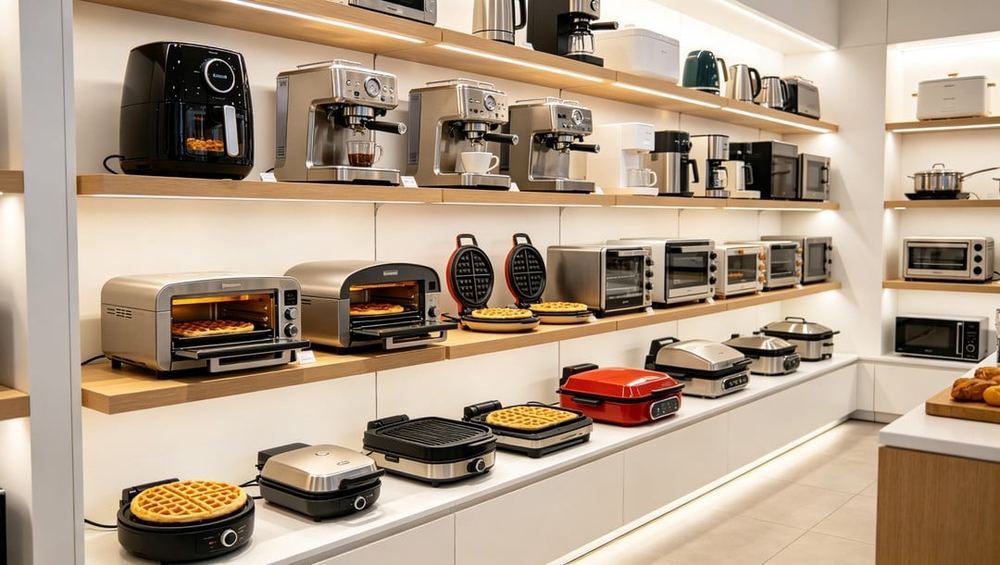
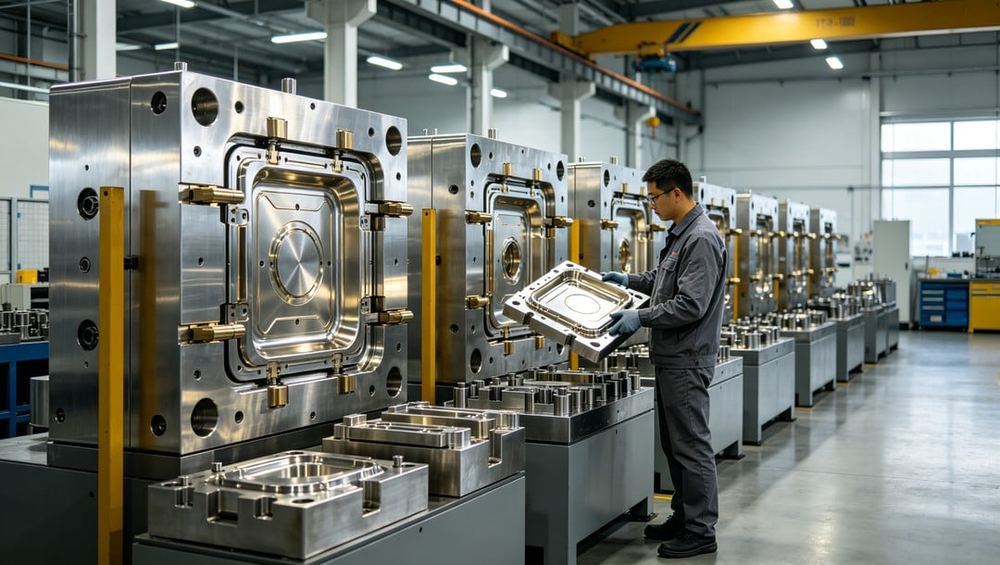
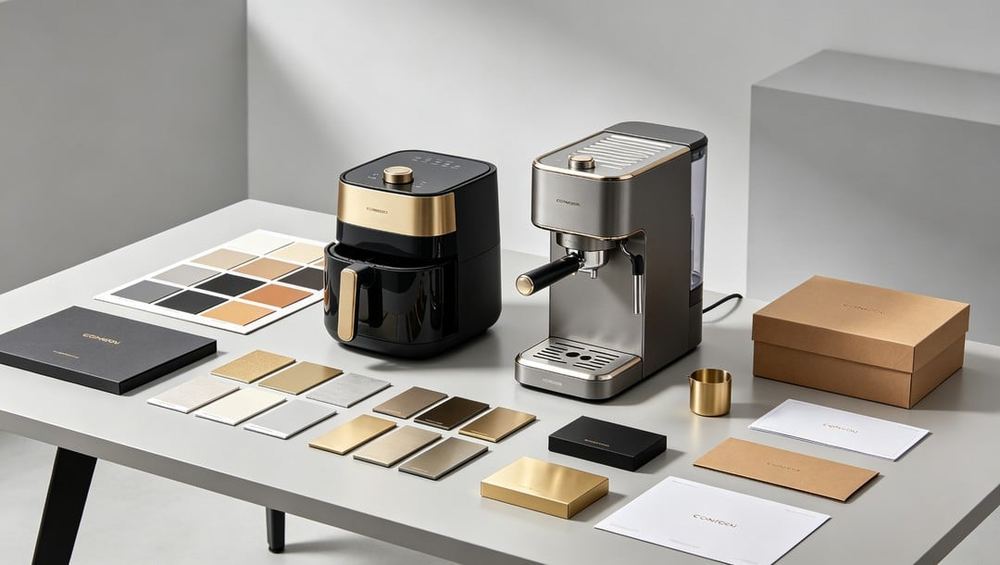
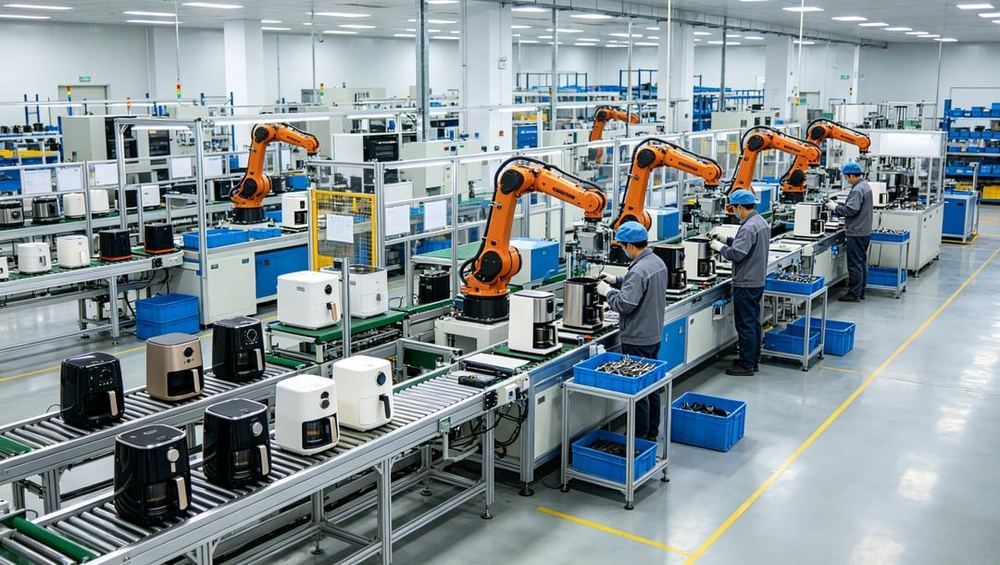
The distinction between OEM and ODM matters less than what is decided at the start. In an OEM arrangement the design is largely settled and the work is manufacturing, tooling and compliance. In an ODM arrangement the design is shared, and the programme has to decide what the product will be before anyone can quote it accurately. What makes both work is the same: the expensive decisions are taken in the first three stages of the seven-stage process, while they are still cheap to change.
Three routes
OEM — you own the design
You bring a finished design, a competitor reference or an existing product you want manufactured. We build to your specification.
ODM — you own the brand
You want your own brand on a product that has to work commercially: a listing that converts, a range that extends, documentation that clears.
Programme management
You need a single accountable partner across design, tooling, compliance and production, because the pieces are interdependent.
The eight things a programme has to cover
Each has its own lead time and its own cost. Treating them as one line item on a quotation is how programmes go wrong.
| Workstream | What it covers | Typical scale | Cost impact | What decides it |
|---|---|---|---|---|
| Design & specification | Mechanical drawing, 3D model, electronics | Weeks | Highest | Changes here are free. Changes after tooling are not. |
| Tooling | Injection moulds, metal stamping | Weeks to months | High | The largest non-recurring cost, and the item most often under-estimated. |
| Certification | Test file, marks, declaration of conformity | Weeks, market-dependent | High | Needs an accredited body and a local applicant in some markets. Book first. |
| Artwork & packaging | Carton, manual, inserts, barcodes | Weeks | Medium | Cannot start before the model is frozen; runs once for the whole range. |
| Samples & approval | First article and functional testing | Weeks | Medium | The step that protects the bulk order. Not the place to save time. |
| Production | SMT and assembly | Per schedule | Medium | Driven by how many distinct platforms the range contains. |
| Spare parts | Replacement-part list and stock | Before launch | Low | Cheap to set up now, expensive to retrofit after launch. |
| Documentation | Invoice, packing list, origin, conformity | Per shipment | Low | Prepared against the confirmed order, not at loading. |
What we need from you to quote accurately
Items 1 to 4 are what a quotation is built from. Items 5 to 7 make it quotable on a date rather than in principle.
| # | Item | What to send |
|---|---|---|
| 1 | Product or application | Model code, or the use case and target market segment |
| 2 | Destination market | Country — determines voltage, plug, marks, labelling and test scope |
| 3 | Quantities per model | Per model, not total, so MOQ and packaging can be priced |
| 4 | Brand and packaging | Own brand or bulk; own brand brings artwork, manual and inserts into scope |
| 5 | Target launch date | A hard date changes which workstreams get booked first |
| 6 | Target price band | Used to select the architecture, not to negotiate after the fact |
| 7 | Certification scope | Required marks and standards for the destination market, if known |
Commercial terms, stated plainly
How the programme is controlled
Four approvals and a single point of contact. The controls exist so that nobody has to rely on memory at the end of a long programme.
Specification sheet approved
The document the line builds against: capacity, power, voltage, controls, materials, packaging configuration.
Sample approved
First article built on production tooling. Approving a prototype photo is the most common cause of a dispute at the end of a programme.
Artwork approved
Carton, manual and inserts, checked against destination-market labelling rules before printing plates are made.
Packing configuration approved
Retail carton, market-ready or bulk — a decision affecting carton cost and labour on arrival.
Between those four approvals, changes are handled as a change request with a cost and schedule impact. That is cheaper than discovering the change after mass production has started.
OEM / ODM questions
What is the difference between OEM and ODM for us?
OEM means you bring the design and we manufacture to it. ODM means we share the design decision — typically you set the commercial target and the brand positioning, and we handle the engineering. The commercial difference is who owns the tooling and how design risk is shared.
Can you develop a product from an idea rather than a drawing?
Yes. Bring the application, the target market segment and the target price band. Feasibility and certification scope come back before anyone models anything.
Who owns the tooling?
The programme defines it before the first tool is cut. It is transferred on final payment under agreed terms. Raising it at the start avoids a negotiation later.
Can we share the tooling cost across a range?
Yes, where the range shares a platform. That is the commercial reason a multi-SKU programme costs less per model than a single-model order.
Do you sign an NDA before seeing our design?
Yes. Confidentiality terms come before technical review, not after.
How long does a first programme take?
Longer than most buyers expect, because certification and tooling sit on the critical path. Tell us the launch window and you get a per-workstream timetable rather than a single number.
Can you handle certification for us?
Yes, with the cost shown as a separate line. Some markets require a local applicant, which is part of the scope discussion.
What if we only want one model to start?
That is normal. The programme is structured so the specification, artwork and documentation are reusable when the range extends.
Do you support our own industrial design being protected?
Yes. IP handling terms are agreed before the technical review begins.
Start an OEM / ODM conversation
Send the product or the idea, the destination market and the quantity — the first reply is a feasibility view, not a price.
At a glance
- Page subject
- Ningbo Anbo United Electric Appliance Co.,ltd (Anbo United)
- Location
- Ningbo, Zhejiang, China
- Primary product lines
- Coffee machines, pizza makers, electric grills
- Core category built alongside
- Air fryers — single basket, dual basket, oven type, smart
- Also manufactures
- Grills & baking, small home appliances, garment care, spare parts
- Services
- OEM / ODM manufacturing, private label, tool& moulds, compliance support
- Official links
- Alibaba.com · LinkedIn
- Sales contacts
- AMY (General Manager / CEO) ceo@anbolife.com · Tony (International Sales) tony@anbolife.com
- Contact
- +86-15355158390 · ceo@anbolife.com
- Content updated