
Coffee Makers
The coffee range covers four brewing technologies — capsule, espresso, fully automatic bean-to-cup, and drip — each with a different cost of ownership, different failure points, and a different after-sales profile. Programmes commonly pair a capsule machine with a drip machine for the volume end of retail.
Reviewed by the Anbo United export team · Page last updated:
Direct answer
Four coffee machine architectures sit in this category: capsule, espresso, fully automatic and drip. They differ in the parts they consume, the counter space they need and the retail price band they sit in — which is why architecture, not colour, is the decision that determines the rest of the range. Capacities run from single-serve upward, with 4 models documented in detail.
- Choose the architecture first; capacity and colour follow from it
- Parts-intensive category, so the spare-parts list is designed with the product rather than assembled after the first warranty claim
Coffee Makers from a Ningbo manufacturer
Primary product line. Capsule, espresso, fully automatic bean-to-cup and drip. Parts-intensive, so the spare-parts strategy has to be designed with the product.
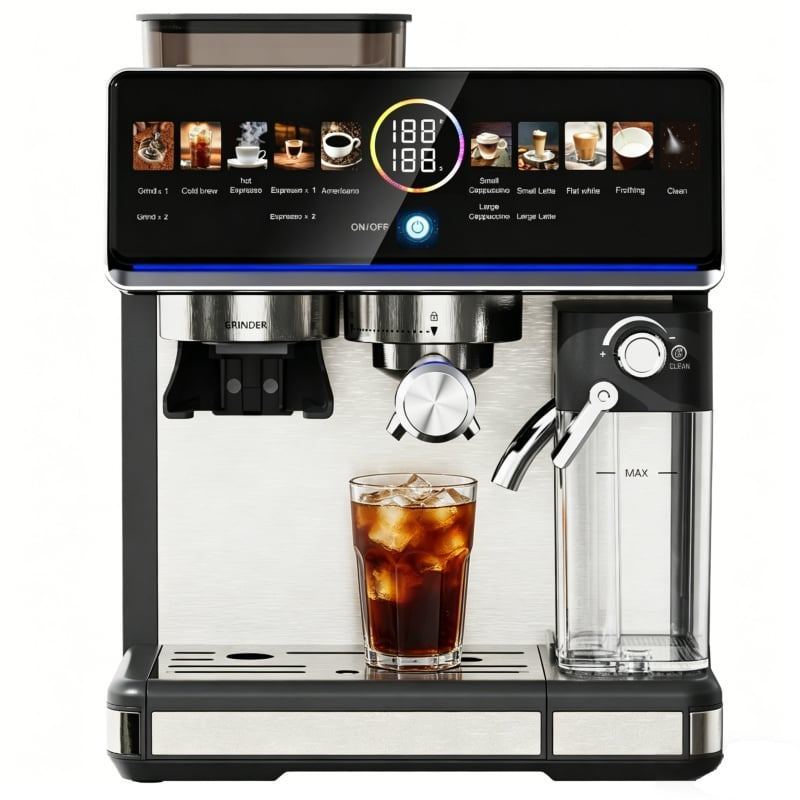
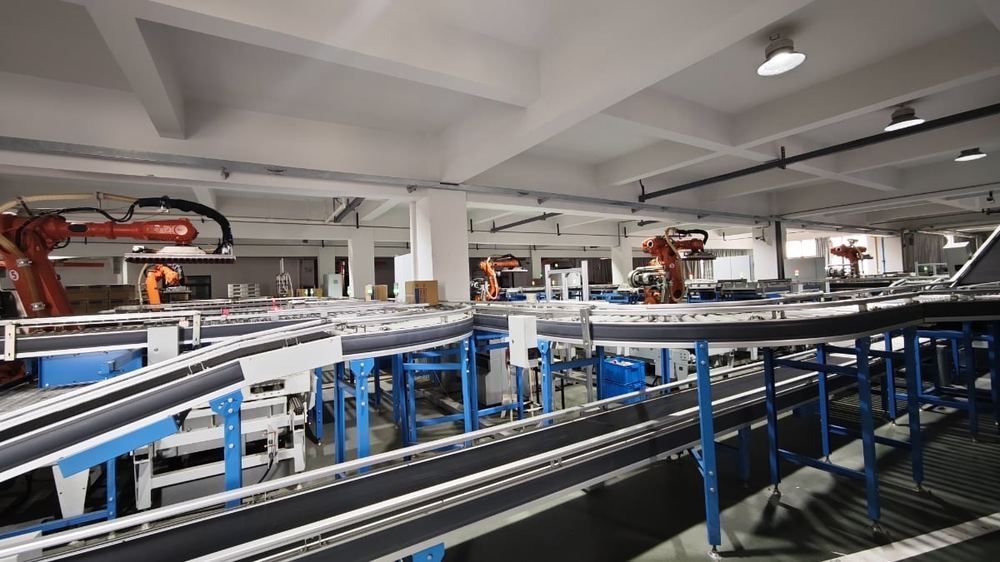
The coffee range covers four brewing technologies — capsule, espresso, fully automatic bean-to-cup, and drip — each with a different cost of ownership, different failure points, and a different after-sales profile. Programmes commonly pair a capsule machine with a drip machine for the volume end of retail.
Coffee machines are a parts-intensive category. Grinders, seals, heating elements and milk circuits all become warranty claims if the spare-parts strategy is not designed at the same time as the product.
4
models in this category
Espresso & drip
role in a multi-item range
Ningbo
manufacturing location
2–6
models per category across the range
Figures on this page are model-specific. The build confirmed on your quotation — voltage, plug, packaging and documentation — is the one that governs your shipment.
Published coffee machine specifications
Seven live listings with the three figures a buyer actually compares — bar pressure, wattage and tank volume — on the record rather than left to a quotation.
| Model | Published specification | FOB price | MOQ |
|---|---|---|---|
| Semi-Automatic Electric Espresso Coffee Machine, 20 bar | 20 bar | $32.00 – 34.00 | 500 pieces |
| 3-in-1 Capsule Coffee Machine, 1100 W, 19/20 bar | 19/20 bar · 1,100 W · NS/DG capsules and ground coffee | $36.70 – 37.60 | 500 pieces |
| Semi-Automatic Espresso Maker, 1400 W, 19 bar | 19 bar · 1,400 W | $39.70 – 42.60 | 500 pieces |
| 20 bar Compact Espresso Machine with Detachable Milk Tank | 20 bar · 500 ml detachable milk tank | $42.00 – 44.60 | 1,000 pieces |
| 5-in-1 Multi Capsule Espresso Maker, 20 bar, 1.5 L | 20 bar · 1.5 L removable water tank water tank | $49.70 – 52.60 | 500 pieces |
| Italian Semi-Automatic Espresso Machine, programmable, 220 V | Not stated | $55.00 – 57.12 | 500 pieces |
| Commercial Fully Automatic Espresso Machine, touch screen, programmable | Not stated | $199.00 | 300 pieces |
| Fully automatic espresso machine, ULKA pump | Not stated on that listing | $165.00 – 190.00 | 500 boxes |
| 2-in-1 espresso maker, thermoblock heating, integrated grinder | Not stated on that listing | $96.00 – 155.00 | 500 boxes |
Where a listing states no pressure, wattage or tank volume the row says so. A specification carried across a range from a similar-looking model is how a data sheet starts lying, and a buyer who catches it stops trusting the rest of the sheet.
Read the range bottom to top. A $32 20-bar semi-automatic machine at MOQ 500 and a $199 commercial fully automatic machine at MOQ 300 come from the same factory. Most suppliers serve one or the other; serving both is what makes a coffee programme worth keeping in one place.
The retail shelf · $32 – 57
Semi-automatic and capsule platforms at 19–20 bar, MOQ 500 pieces. This is where most retail programmes start.
The mid tier · $96 – 155
Thermoblock machines with an integrated grinder, MOQ 500 boxes. The step up in price is the grinder and the thermoblock, not the bar figure.
The commercial tier · $199
Fully automatic touch-screen machines at MOQ 300 pieces. MOQ drops because commercial buyers order units, not parts.
The one model our corporate site publishes in full
One model carries a complete published product page on our corporate site. Its functions are reproduced here in the state they are published — and the numbers it does not state are left empty on purpose.
<b>Built-in coffee grinder</b>
Integrated grinder with a transparent bean hopper on top; the control panel displays a grinding-time setting.
<b>Digital touch control panel</b>
Illuminated indicators with beverage icons for Grind, Espresso, Cappuccino, Latte, Hot Milk and Espresso Cool, plus grinding time, brewing time and brewing temperature.
<b>Integrated milk frothing</b>
External milk container with a frothing assembly, covering cappuccino, latte and hot milk.
<b>Stainless steel body</b>
Brushed stainless steel exterior with a black digital display and coordinated milk container.
<b>Multi-function brewing area</b>
Central brewing head, portafilter-style component and a removable-style drip tray with cup clearance.
What this page does not state. This is the only product page our corporate site currently publishes. Pressure, wattage, boiler type, capacity, dimensions and weight are not stated there, so they are not stated here either. Ask for the specification sheet against a model number.
Coffee Makers in this category
Every model listed here is orderable on its own or as part of a multi-category programme.
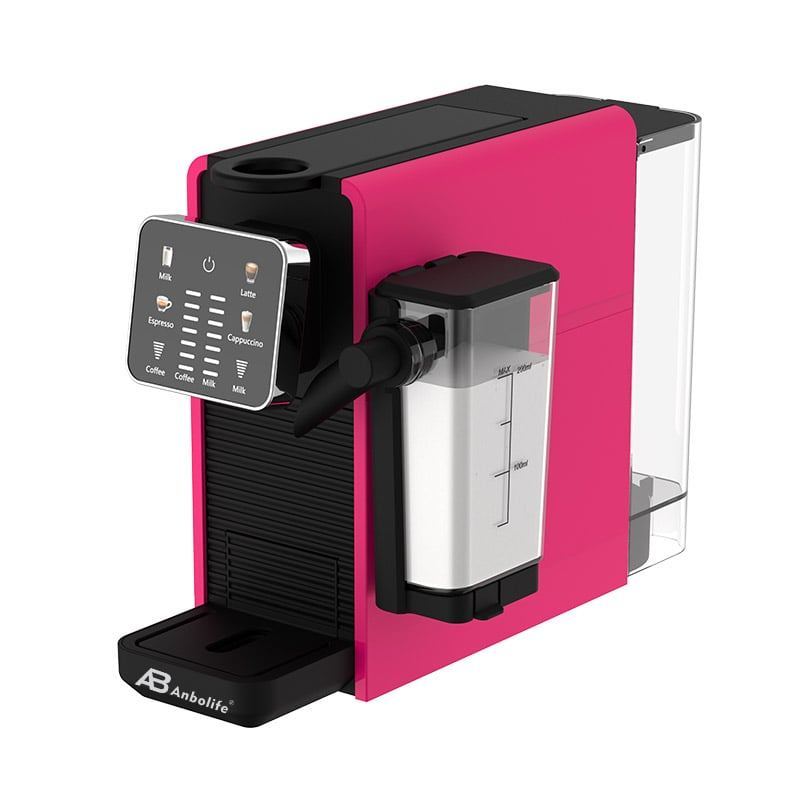
CM150
150 ml Capsule Espresso Machine
The lowest-cost entry into the coffee category, and the strongest consumable attach rate. Suits volume retail and first-time coffee programmes.
- Water tank: 250 ml removable
- Pressure: 19 bar
- Heating: Thermoblock, fast heat-up
- Power: 1,350 W
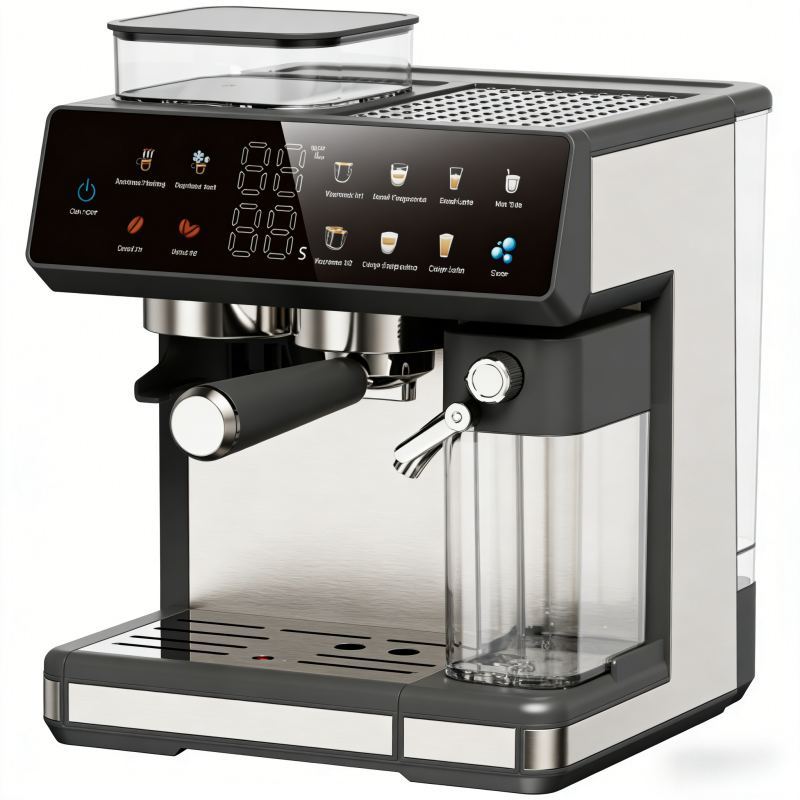
CM320
20 Bar Semi-Automatic Espresso Machine with Grinder
The mainstream espresso platform. Integrated grinding plus manual control of shot parameters is what most home and prosumer buyers are actually choosing between.
- Pressure: 20 bar pump
- Grinder: Conical burr, 20 grind settings
- Water tank: 1.8 L removable
- Heating: Single boiler with brew and steam
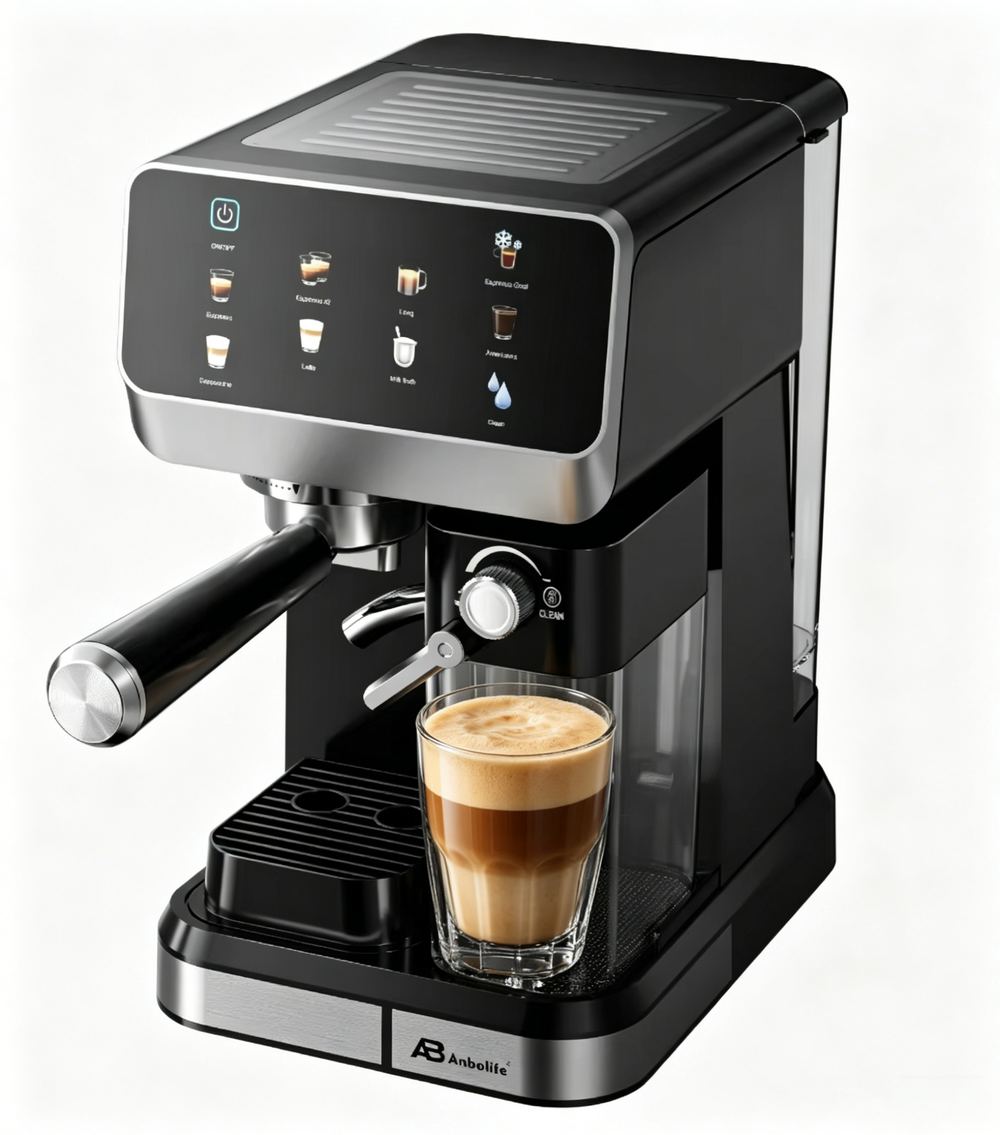
CM420
Bean-to-Cup Automatic Espresso Machine
The premium configuration. Highest perceived value in the category and the highest failure rate — which makes spare-parts strategy the deciding commercial factor.
- Pressure: 19 bar pump
- Grinder: Ceramic burr, 8 grind settings
- Water tank: 1.9 L removable
- Heating: Thermoblock
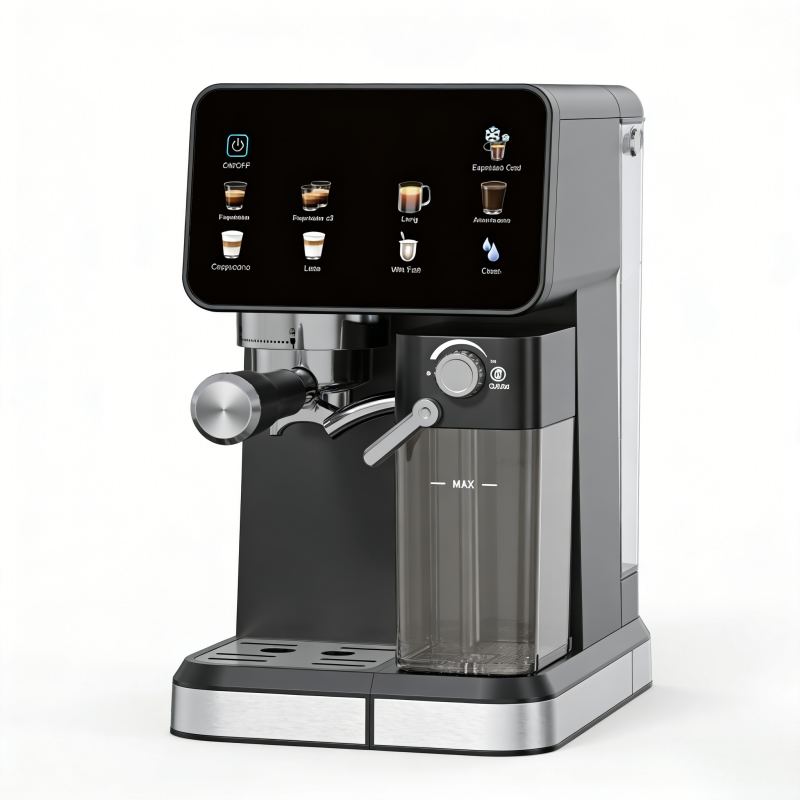
CM520
Programmable Drip Coffee Maker with Thermal Carafe
The volume end of the coffee range. Programmable timing and a thermal carafe are the two features that distinguish it from a basic drip model.
- Capacity: 1.0–1.2 L / 12 cups
- Programmable timer: 24-hour, 24 settings
- Carafe: Thermal, stainless steel
- Filter: Permanent filter, no paper required
Specification matrix
Compare the range without opening each page. Capacity is usable capacity where the category defines one.
| Model | Product | Architecture | Capacity | Power | Voltage | Control |
|---|---|---|---|---|---|---|
| CM150 | 150 ml Capsule Espresso Machine | Capsule, single serve | On request | 1,350 W | 220–240 V / 110–120 V (region-specific build) | — |
| CM320 | 20 Bar Semi-Automatic Espresso Machine with Grinder | Semi-automatic, integrated grinder | On request | 1,350 W | 220–240 V / 110–120 V (region-specific build) | — |
| CM420 | Bean-to-Cup Automatic Espresso Machine | Fully automatic, colour display | On request | 1,500 W | 220–240 V / 110–120 V (region-specific build) | — |
| CM520 | Programmable Drip Coffee Maker with Thermal Carafe | Drip, scheduled brewing | 1.0–1.2 L / 12 cups | 1,000 W | 220–240 V / 110–120 V (region-specific build) | — |
All figures are the manufacturer's nominal specification for the standard build. Voltage is region-specific: the same platform is built for 110–120 V and 220–240 V destinations, with the heating element and control configuration matched rather than adapted. Capacity is stated as usable capacity, with total capacity given separately where the two differ.
Questions buyers ask before shortlisting coffee makers
These come up on almost every enquiry in this category, so they are answered here rather than held for a call.
Before you shortlist
What determines the after-sales cost of an espresso machine?
Three things: grinder burr quality, seal and gasket serviceability, and how many distinct spare parts the model consumes. A machine with nine serviceable parts is materially cheaper to support than one with twenty-five, even at similar unit price.
Should a first programme be capsule, espresso, or automatic?
Capsule machines have the lowest unit cost and the highest consumable attach rate. Automatic bean-to-cup machines have the highest perceived value and the highest failure rate. Most retailer ranges start with capsule plus espresso and add automatic later.
Do you supply grinders and milk frothers as integrated or separate?
Both exist in our range. Integrated is easier to merchandise; separate reduces SKU count and service parts. We can advise per programme based on your shelf plan.
Where these models are sold
Application drives the specification, the packaging and the after-sales argument — so it is worth naming at enquiry stage.
Volume retail programmes
Lowest unit cost in the coffee range with the highest repeat purchase through consumables. A sensible category entry point.
Office and hospitality secondary units
Compact footprint and simple operation suit small kitchens where a full machine is impractical.
First-time category launches
Certification burden is lower than for espresso or automatic machines, so this model reaches market fastest.
Mainstream home and prosumer retail
This is the volume configuration in most markets. Listing copy should lead on grinder adjustability rather than on pump pressure alone, because that is what buyers compare.
Sellers competing with supermarket own-label
Own-label espresso programmes compete on included accessories and warranty, not on bar pressure. Bundling a knock box and tamper is standard.
Office and hospitality use
Manual operation suits a self-service model where the user controls the shot.
Premium and premium-plus ranges
The configuration that justifies the top price band in coffee. The listing must carry the premium rather than competing on specification.
Ranges where beverage variety is the selling point
Five beverage types from one machine is a strong listing story for households replacing several single-purpose appliances.
Hospitality suites and executive pantries
Where a single unattended machine serving different drink preferences is the operational requirement.
Compliance and documentation for coffee makers
Documentation is planned with the order. The items below are the ones that most often decide whether a shipment clears on arrival.
- Electrical safety and EMC testing to the destination market standard
- Pressure vessel and seal testing
- Capsule compatibility and jam-clearance verification
- Food-contact material declarations for water path components
- Pressure system and seal testing
- Boiler thermal cut-out and abnormal-operation testing
- Food-contact material declarations for water and steam paths
- Grinder and brew unit endurance testing
- Water-path and milk-path hygiene verification
- Removable-parts washability and service-access verification
- Heating element and thermal cut-out testing
- Food-contact material declarations for carafe and water path
- Timer and electrical endurance verification
Marks, plug type, labelling and language requirements are market-specific. Tell us the destination country at quotation stage so the compliance list is built for the market you are actually shipping into, not a generic one.
Models buyers pair with coffee makers
The categories that usually go into the same programme. Each one links straight to its models, so a multi-category range can be built from this page without going back to the catalogue.
Pizza Makers
Breakfast and cooking in the same kitchen. The most common two-item programme we quote, because one order ships one breakfast routine.
| Model | Product | Architecture | Link |
|---|---|---|---|
| PZ260 | 260 mm Countertop Pizza Maker | Home, single deck | All Pizza Makers models → |
| PZ380 | 380 mm Countertop Pizza Maker with Rotating Deck | Commercial-duty, rotating deck | PZ380 details → |
Grills & Baking
A coffee-led morning range and an evening cooking range share the same retail account and the same carton planning.
| Model | Product | Architecture | Link |
|---|---|---|---|
| GR300 | 1800 W Contact Electric Grill | Contact grill, hinged plate | All Grills & Baking models → |
| GR360 | Outdoor Electric Barbecue Grill | Open-grill, tilting deck, upright storage | GR360 details → |
| WF150 | 150 Waffle Maker with Interchangeable Plates | Waffle and sandwich plates, interchangeable | WF150 details → |
Small Home Appliances
Kettles, blenders and toasters complete a breakfast set, and reuse the same small-appliance platform and spares.
| Model | Product | Architecture | Link |
|---|---|---|---|
| KT220 | 1.7 L Stainless Steel Electric Kettle | Cordless, temperature selection | All Small Home Appliances models → |
| BL260 | 800 W Countertop Blender with Vacuum Jug | Blender, variable speed, vacuum jug | BL260 details → |
| TS180 | 4-Slice Toaster with Bagel and Defrost Modes | Toaster, 4 slot | TS180 details → |
All other categories
The full range in one table, with the commercial reason each category is carried. Every model name links to its page.
| Category | Models | Model pages | Why it is in the range |
|---|---|---|---|
| Pizza Makers | 2 | PZ260, PZ380 | Primary line. Countertop heat appliance, pairs with the grill range in one programme. |
| Grills & Baking | 3 | GR300, GR360, WF150 | Primary line. Seasonal shape, pairs with pizza makers and air fryers. |
| Air Fryers | 6 | AF540, AF680, AF700, AF720, AF820, AF900 | Core adjacent category. Four architectures, and the strongest attach rate for accessories. |
| Small Home Appliances | 3 | KT220, BL260, TS180 | Bundle partner across the whole range. |
| Garment Care | 2 | SI240, GS320 | Separate use case, shared platform and carton. |
| Accessories & Spare Parts | 2 | ACC-KIT, ACC-BASKET | Retention category. Attach rate is the commercial argument. |
| Full catalogue | 22 | All 22 models across 7 categories | One table, every model, every specification. |
Buying guides for coffee makers
| Guide | Topic | Date | |
|---|---|---|---|
| What 20 bar actually means on an espresso machine | Coffee machines | 2026-10-10 | Read |
| One factory, $32 retail to $199 commercial: what that means for a coffee programme | Coffee machines | 2026-10-10 | Read |
| How to tell if a Chinese coffee maker supplier is a factory or a trading company | Supplier verification | 2026-10-16 | Read |
| Verifying an NRTL listing is real: UL, ETL and the databases that check them | Compliance | 2026-10-16 | Read |
| The spare parts clause: how to structure free-of-charge parts in a coffee machine contract | Contract terms | 2026-10-16 | Read |
| Vibration pump lifetime: what to ask a supplier, and why the answer is usually a number they cannot prove | Quality engineering | 2026-10-16 | Read |
| Food-contact material documents for espresso machines: what to request and what each one proves | Compliance | 2026-10-16 | Read |
| California Proposition 65 and small kitchen appliances: when it does not apply, and when it does | Compliance | 2026-10-16 | Read |
| What actually determines units per container: why the unit count is the last question, not the first | Logistics | 2026-10-16 | Read |
| UL 1082 and coffee maker safety standards: scope, the other standards, and what to request | Compliance | 2026-10-16 | Read |
| ISTA 3A vs Amazon SIPP: what each drop test is for, and why the report matters more than the standard name | Logistics | 2026-10-16 | Read |
| Custom injection mould cost: what the fee is made of, and how to structure amortisation | Tooling and cost | 2026-10-16 | Read |
| Tooling ownership in a manufacturing contract: the clauses that decide who owns the mould | Contract terms | 2026-10-16 | Read |
| Tracing who actually manufactures a branded product: what you can verify, and what you cannot | Supplier verification | 2026-10-16 | Read |
| How to Select a Coffee Machine Price Band for Saudi Tabby and Tamara? | Saudi Arabia | 2026-10-22 | Read |
| How to Select a BIS-Certified Coffee Maker for India under IS 302? | India | 2026-10-22 | Read |
| Which Coffee Machine Categories Should You Not Buy from Us? | Supplier scope | 2026-10-22 | Read |
| Our own factory figures disagree with each other. Here is how we handle it | Sourcing and verification | 2026-10-10 | Read |
Each guide is built on figures this site publishes. Where a question reaches for a figure we do not publish, the guide says so and gives the verification path instead of a value.
Need a range across more than one category?
Send the categories, the destination market and the target quantities — the tooling and MOQ structure is easier to judge as a whole.
At a glance
- Page subject
- Ningbo Anbo United Electric Appliance Co.,ltd (Anbo United)
- Location
- Ningbo, Zhejiang, China
- Primary product lines
- Coffee machines, pizza makers, electric grills
- Core category built alongside
- Air fryers — single basket, dual basket, oven type, smart
- Also manufactures
- Grills & baking, small home appliances, garment care, spare parts
- Services
- OEM / ODM manufacturing, private label, tool& moulds, compliance support
- Official links
- Alibaba.com · LinkedIn
- Sales contacts
- AMY (General Manager / CEO) ceo@anbolife.com · Tony (International Sales) tony@anbolife.com
- Contact
- +86-15355158390 · ceo@anbolife.com
- Content updated