
Quality assurance
Six gates between incoming material and a sealed container — and an honest account of which failures are caught in-house and which need a laboratory.
Reviewed by the Anbo United export team · Page last updated:
Direct answer
6 quality gates sit between incoming material and a sealed container. The purpose is to find the problem while it is still cheap to fix, which is why in-house functional and safety testing matters more than final inspection. Certification testing for the destination market is done by an accredited laboratory rather than on our own bench, and the two are not interchangeable. Sampling level is agreed per programme rather than fixed site-wide, because the acceptable defect class depends on the product and the channel it sells through.
- Six gates sit between incoming material and a sealed container: incoming inspection, in-process line checks, functional and safety testing, final inspection with AQL sampling, pre-shipment verification, and batch traceability. In-house testing catches functional and thermal failures; certification testing for the destination market is done by an accredited laboratory, not on our own bench.
- Batch traceability from incoming material to shipment is what turns a field issue into a corrective action rather than a guess.
Quality assurance
Six gates between incoming material and a sealed container. The purpose is simple: find the problem while it is still cheap to fix.
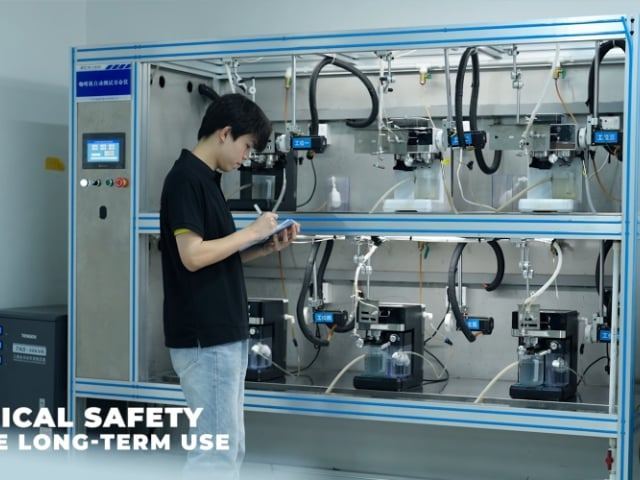

Quality in a small-appliance programme is decided long before final inspection. Most field failures — heating faults, thermostat drift, abnormal-operation behaviour, cord or plug faults — originate in material specification, component choice or process control. Catching them at the line costs a few minutes; catching them in your warehouse costs a collection, a replacement and a listing you cannot fix by replying to email.
The six quality gates
Incoming material inspection
Incoming resin, metals, electronics and packaging are checked against the approved specification before they reach a line. Non-conforming material is quarantined rather than sorted into production.
In-process line checks
Defined checkpoints during assembly and SMT, recorded per line rather than sampled at the end. Critical parameters are checked against a control plan agreed with the product.
Functional and safety testing
Every unit goes through functional and safety testing appropriate to its category — temperature rise, abnormal operation, earth continuity, leakage current and related parameters depending on the model.
Final inspection and sampling
Final QC against a written inspection standard, with AQL sampling applied to the agreed level. Inspection is done against the same checklist used for the approved sample.
Pre-shipment verification
Carton marking, labelling, quantities, packing list and appearance are verified before the container is sealed, so documentation problems are found at our end rather than at yours.
Traceability and corrective action
Batch traceability from incoming material to shipment, so a field issue can be traced to a production window and answered with a corrective action rather than a guess.
Four layers of project verification
This is how our corporate site describes the verification path, and it is worth reading because it explains what a certificate actually attaches to.
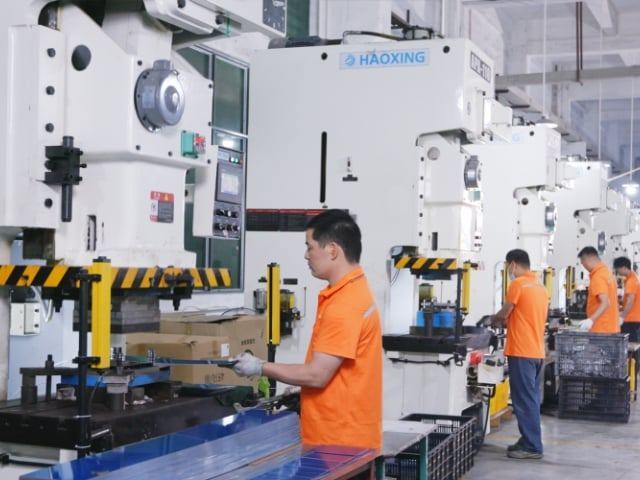
1LAYER 01
Materials and components are checked against the requirements defined for the product project, before they reach the line.
2LAYER 02
Assembly, appearance and applicable functional checks are carried through the production stages rather than at the end only.
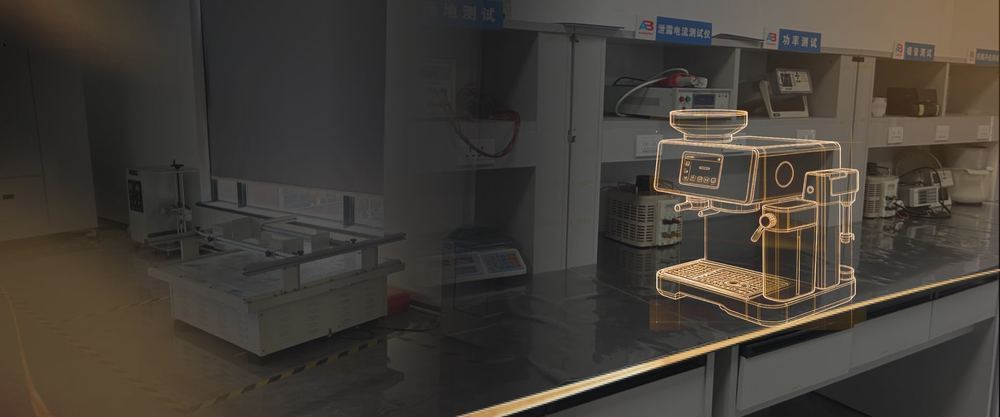
3LAYER 03
Electrical checks matched to the product type and the approved test plan. AC-powered products receive high-voltage testing.
4LAYER 04
Certificate references are tied to a specific model, scope, issuing body and validity period before they are used on a project.
Two inspection policies we publish
These come from our Global Sources manufacturer profile, and they are the two claims on this page most likely to change your return rate.
100% inspection before loading
Every unit is inspected before it is loaded, not a random AQL sample taken after the container is sealed.
100% high-voltage test on AC products
Every AC-powered appliance is high-voltage tested. This is the single most common cause of returns on small kitchen appliances, and it is the one most often skipped.
Complete quality control system
An in-house QC system covering incoming material, in-process and pre-shipment stages.
Testing on site
The tests that decide whether a model is safe and whether it will pass the destination market's file.

| Test | Applies to | Frequency / note |
|---|---|---|
| Ground continuity and leakage current | Electrical safety | On every unit through the test station. |
| Temperature rise | Heating systems | On every unit — this is the highest-return test in the air fryer range. |
| Abnormal operation | Heating systems | Samples per batch, and on every unit where the heating system differs. |
| EMC emissions and immunity | Destination-market file | Per model per destination, typically at a third-party laboratory. |
| Food-contact material declarations | Materials | Declared for basket, grate and any food-contact path, as documentation. |
| Functional run | Every unit | Controls, timer, temperature setting and indicators verified. |
| Cord, plug and strain-relief check | Every unit | Mechanical safety on the part that fails most often in service. |
| Packaging and marking verification | Pre-shipment | Legible, correct and matching the confirmed artwork. |
Where failures are actually caught
The honest part: not everything is caught in-house, and knowing which is which makes the programme plan better.
Documentation you receive
| Document | When | Note |
|---|---|---|
| Commercial invoice and packing list | Every shipment | Prepared against the confirmed order, not generated at loading. |
| Certificate of origin | On request per market | Specified at order stage because the format differs by destination. |
| Test reports | Per model and destination | Scope agreed before testing, so the report is usable rather than partial. |
| Food-contact material declarations | Per food-contact model | For basket, grate and related contact paths. |
| Declaration of conformity | Where the market requires it | Prepared with the compliance file, referencing the applicable standard. |
| Packing list with carton markings | Every shipment | Matching the confirmed artwork and market labelling. |
What we ask you to confirm before production
Four approvals. Skipping any of them is the most common cause of a shipment that arrives and cannot be sold as intended.
Approved specification sheet
Every parameter that affects the build: capacity, power, voltage, controls, materials. This is the document the line builds against.
Approved sample
The first article, built on production tooling. Approving a photo of a prototype is the single most common cause of a dispute later.
Approved artwork
Carton artwork, manual and inserts, checked against destination-market labelling rules before plates are made.
Approved packing configuration
Retail carton, market-ready or bulk packing — a decision that affects carton cost and labour on arrival.
Quality questions
Do you test every unit?
Functional and safety checks appropriate to the model run on every unit. Batch-level and destructive testing runs on samples per the agreed plan, which is standard practice and is defined in the quality agreement.
Can we send a third party to inspect before shipment?
Yes. Pre-shipment inspection by your own inspector or an appointed third party is a normal part of the programme. Book it with enough notice to fall inside the production window.
What happens if a defect is found?
It depends where it is found. Before shipment it is contained in-house; after arrival it is handled through the corrective-action route, using batch traceability to establish the production window involved.
Do you guarantee a defect rate?
An agreed AQL sampling level is written into the quality agreement, and remedies for a lot that fails it are agreed in advance rather than negotiated afterwards.
Who pays for a third-party certification test?
As a rule the buyer, because the test file is built to the buyer's destination market and brand requirements. The cost is quoted as a separate line so it is visible rather than buried.
Can we visit during production?
Yes. Visits are more useful mid-production than at the end, when the decisions that shaped the result have already been made.
Agree the quality terms with the order
Send the models and destination market — inspection level, documentation scope and testing responsibilities come back with the quotation.
At a glance
- Page subject
- Ningbo Anbo United Electric Appliance Co.,ltd (Anbo United)
- Location
- Ningbo, Zhejiang, China
- Primary product lines
- Coffee machines, pizza makers, electric grills
- Core category built alongside
- Air fryers — single basket, dual basket, oven type, smart
- Also manufactures
- Grills & baking, small home appliances, garment care, spare parts
- Services
- OEM / ODM manufacturing, private label, tool& moulds, compliance support
- Official links
- Alibaba.com · LinkedIn
- Sales contacts
- AMY (General Manager / CEO) ceo@anbolife.com · Tony (International Sales) tony@anbolife.com
- Contact
- +86-15355158390 · ceo@anbolife.com
- Content updated