
Category notes and buying positions
Positions with the reasoning attached — written so a buyer can disagree with the conclusion and still use the analysis.
Reviewed by the Anbo United export team · Page last updated:
Direct answer
This page sits inside the catalogue documentation of a range that covers 7 categories and 22 models. Every figure shown is model-specific and belongs to the standard build; voltage, plug, packaging and destination-market documentation are confirmed on your quotation and the build that ships is the one named on the accompanying documents.
- 7 categories — coffee machines, pizza makers and electric grills as the primary lines, with air fryers, small kitchen appliances, garment care and spare parts alongside
- 22 models, each with its own specification page
- Every model page states usable capacity ahead of total capacity wherever the two differ
Insights
Category notes and buying positions — what we believe about how this category works, written so it can be argued with.
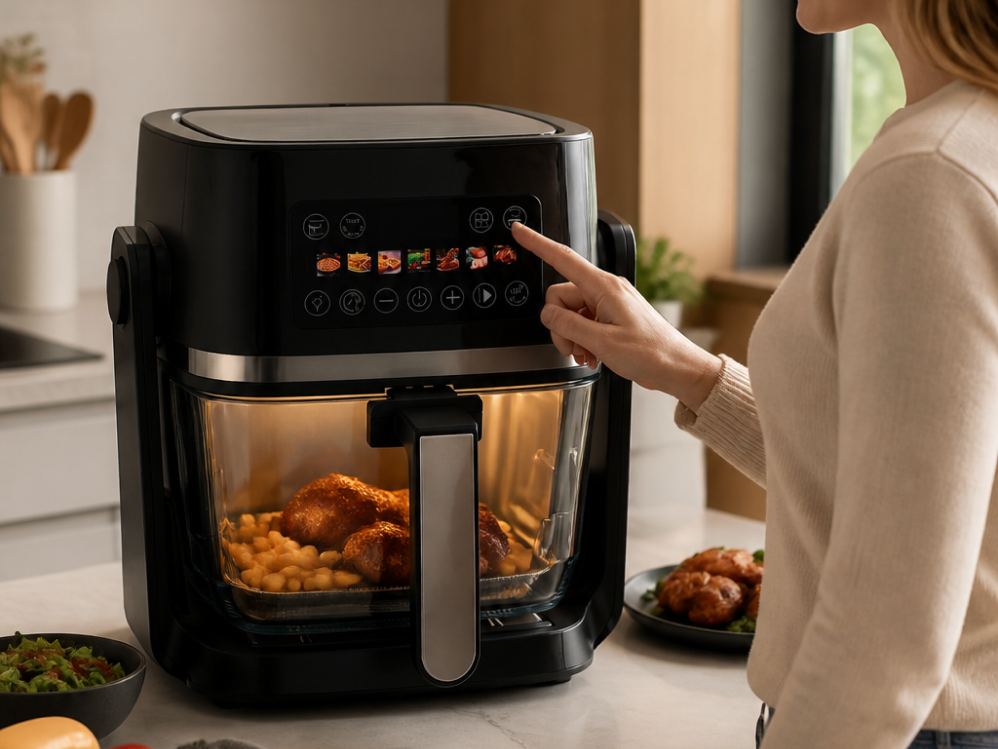

These are positions, not promotions. Each one states a view and the reasoning behind it, so a buyer can disagree with the conclusion and still use the analysis. Where a claim depends on a market-specific rule, it points to the reference page rather than asserting a general answer.
Recent notes
- Capacity is the return-rate lever nobody specifiesCategory noteTotal capacity is the most-cited reason for returns in air fryer categories. Stating usable capacity is a one-line specification change with a measurable effect on size-related returns.
- The platform structure is the real argument for a rangeRange buildingThe commercial case for a multi-model programme is not volume discount. It is that models sharing a platform share tooling, fixtures, test jigs and inspection points — so the second SKU genuinely costs less to launch.
- Certification is a schedule item, not a paperwork itemComplianceAccredited testing and market registration sit on the critical path and are routinely discovered after production has been planned around a date they cannot meet.
- Artwork is expensive to change after platesPrivate labelThe packaging sequence is not bureaucracy: structure, layout, compliance review, proof, plates. Each step is cheaper than the next, and plates are the point of no return.
- Spare parts decided after launch are always too lateAfter-salesA replacement-part list defined during design costs almost nothing. The same list assembled from field failures costs more and covers less.
- Lead time is a design decision, not a factory factOperationsThe number of distinct platforms in a range moves lead time more than the number of machines on the floor. One platform across six models moves faster than six platforms across six models.
What these notes are for
The distinction between a position and a claim is what makes these worth reading.
Where we take positions
| Topic | The position | Reference |
|---|---|---|
| Capacity | Usable capacity, always — total capacity is a return-rate problem. | Buying guides |
| Range structure | Platform sharing before SKU selection; the second SKU should cost less to launch than the first. | Retail brands |
| Certification | Planned as a schedule item with its own lead time, before production is planned around a date. | Compliance support |
| Packaging | Structure, layout, compliance, proof, plates — in that order, because the cost of change rises at every step. | Private label |
| Spare parts | Defined during design, not assembled from field failures. | Accessories |
| Lead time | Stated per model on platform and queue position, never as a factory-wide figure. | Manufacturing |
About these notes
Do you write about competitors?
No. Category analysis and buyer positions only — the value of this page is the reasoning, not the comparison.
Are these views company policy?
They are positions we hold and act on, which is why they show up in the way our pages are structured. Where a market rule decides the answer, the page points to the reference instead.
How often is this updated?
As the position changes rather than on a schedule. Each note carries the date it was last reviewed in the page fact block.
Can we republish these notes?
Ask. We are happy for the reasoning to be cited with attribution, because the reasoning is more useful than the conclusion.
Discuss a position
If you disagree with one of these, send the counter-argument — the arguments are more useful than the conclusions.
At a glance
- Page subject
- Ningbo Anbo United Electric Appliance Co.,ltd (Anbo United)
- Location
- Ningbo, Zhejiang, China
- Primary product lines
- Coffee machines, pizza makers, electric grills
- Core category built alongside
- Air fryers — single basket, dual basket, oven type, smart
- Also manufactures
- Grills & baking, small home appliances, garment care, spare parts
- Services
- OEM / ODM manufacturing, private label, tool& moulds, compliance support
- Official links
- Alibaba.com · LinkedIn
- Sales contacts
- AMY (General Manager / CEO) ceo@anbolife.com · Tony (International Sales) tony@anbolife.com
- Contact
- +86-15355158390 · ceo@anbolife.com
- Content updated