
Spare parts: a design decision, not an after-sales task
A replacement-part list defined during design costs almost nothing. The same list assembled from field failures costs more and covers less.
Reviewed by the Anbo United export team · Page last updated:
Direct answer
This page answers one of the decisions a buyer has to make before an appliance programme can be specified. The useful framing throughout is that most sourcing mistakes are sequencing mistakes: the decision that looks small — destination market, architecture, usable capacity — is expensive to reverse after tooling, artwork or certification has started. The range behind these decisions is 7 categories and 22 models, with 3 primary product lines.
- Figures here are normal production values, not guaranteed limits for every order
- Where a value depends on the destination market, the rule is linked rather than asserted generally
- MOQ and lead time are quoted per model, not as a single site-wide number
After-sales · 2026-07-14
A replacement-part list defined during design costs almost nothing. The same list assembled from field failures costs more and covers less.
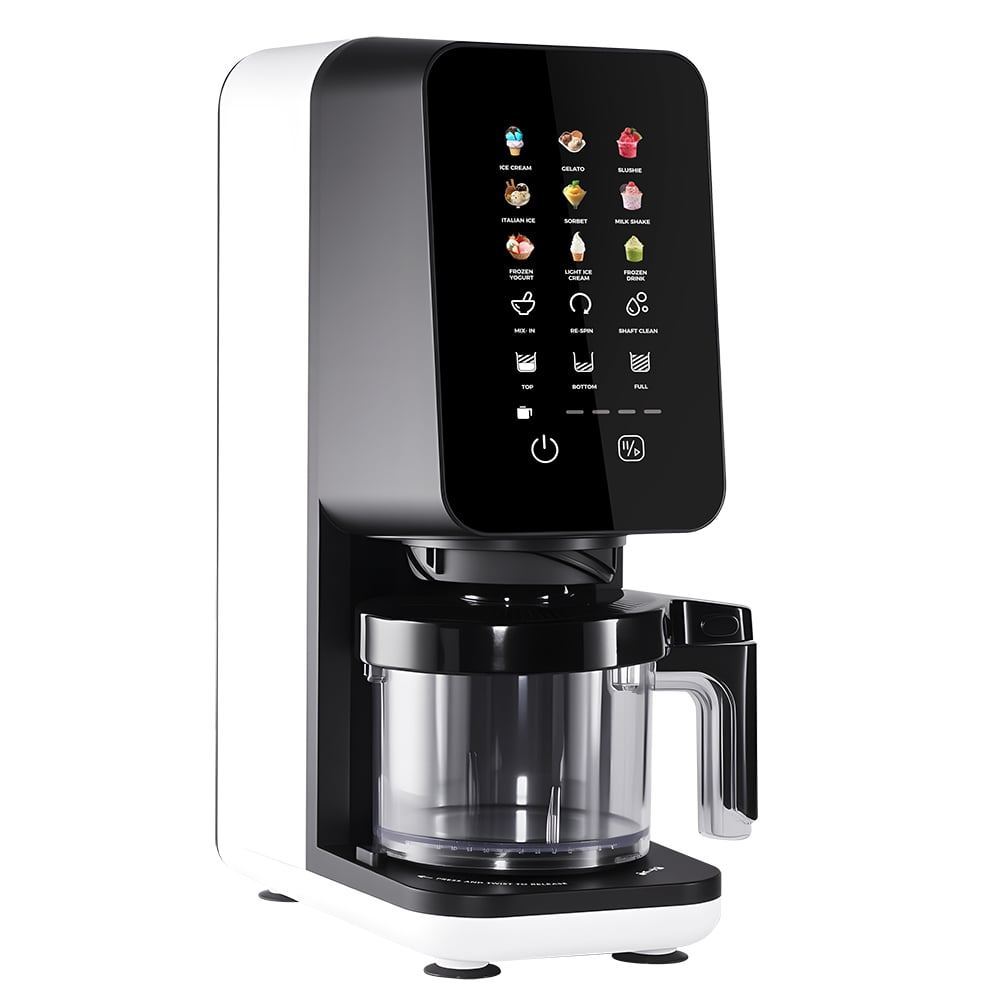
Where the parts list usually gets written
After the first warranty claim, in practice. A distributor reports that cord sets are failing, someone asks the factory for replacement parts, and the factory quotes what happens to be on the shelf.
That list is a record of what failed rather than a plan of what will fail. It misses the parts that fail rarely but block the product entirely, and it misses the parts that differ by voltage build or by production revision — which is how a distributor ends up holding stock that does not fit.
What changes when it is designed in
A parts list built during design carries the variant structure with it: which parts are shared across the platform, which differ by model, and which differ only by destination market. That last distinction is the one distributors get wrong most often, because cord sets and plugs are market-specific while baskets and seals are platform-wide.
Designing the list in also changes the commercial conversation. Accessory attach-rate becomes a planned objective rather than a side effect, and after-sales cost becomes something that can be quoted instead of absorbed.
The practical minimum
If a full list is not yet feasible, the minimum viable version is short: for each model in the range, the cord set, the plug, the basket, the grate, the seal and the control board, with the variant each one covers. That is one page, and it is the difference between a distributor who can service the product and one who cannot.
Where this sits in more detail
The reference pages behind this note, and the models it applies to.
| Topic | Reference page |
|---|---|
| Platform structure and range building | For retail brands |
| Compliance sequencing | Compliance support |
| Destination-market requirements | Standards library |
| Lead time and manufacturing | Manufacturing |
| MOQ, sampling and first order | MOQ and sampling guide |
| Full model matrix | All 22 models |
Models this note applies to
Accessories & Spare Parts
Retention category. Attach rate is the commercial argument.
| Model | Product | Architecture | Link |
|---|---|---|---|
| ACC-KIT | Air Fryer Care and Spare Parts Kit | Consumables and spares | Open model page → |
| ACC-BASKET | Replacement Basket and Grate Set | Replacement wear parts | Open model page → |
Air Fryers
Core adjacent category. Four architectures, and the strongest attach rate for accessories.
| Model | Product | Architecture | Link |
|---|---|---|---|
| AF540 | 5.0 L Digital Air Fryer | Single basket, digital | Open model page → |
| AF680 | 6.5 L Dual Basket Air Fryer | Dual basket with independent zones | Open model page → |
| AF700 | 7.0 L Oven-Type Air Fryer | Oven type, rotating basket or fixed shelf | Open model page → |
| AF720 | 7.5 L Dual Basket with Steam Function | Dual basket with combined steam and crisp | Open model page → |
| AF820 | 8.0 L Smart Air Fryer with App Control | Smart, app-paired, recipe library | Open model page → |
| AF900 | 9.5 L Commercial-Capacity Air Fryer | High-output, continuous duty | Open model page → |
More notes
- Why a platform structure lowers the cost of your second SKU2026-10-02Multi-model programmes are usually justified by volume discount. The stronger argument is that models sharing a platform share tooling, fixtures, test jigs and inspection points.
- Decide the destination market before the specification is frozen2026-09-18Six things change as soon as the destination country is fixed — voltage, plug, test scope, marks, labelling and importer identity. Most of them are expensive to change afterwards.
- Usable capacity versus total capacity: the cheapest return-rate fix available2026-08-27The most-cited reason for returns in the air fryer category is a specification wording problem rather than a product problem.
- Exhibition report: what buyers asked that the catalogue did not answer2026-06-30Two days of conversations produced a list of questions that a product catalogue structurally cannot answer — and the pattern behind them.
- Lead time is a design decision more than a factory fact2026-05-21The number of distinct platforms in a range moves delivery time more than the number of machines on the floor does.
Ask about this topic
If the note raises a question for your programme, send it with your destination market and model list.
At a glance
- Page subject
- Ningbo Anbo United Electric Appliance Co.,ltd (Anbo United)
- Location
- Ningbo, Zhejiang, China
- Primary product lines
- Coffee machines, pizza makers, electric grills
- Core category built alongside
- Air fryers — single basket, dual basket, oven type, smart
- Also manufactures
- Grills & baking, small home appliances, garment care, spare parts
- Services
- OEM / ODM manufacturing, private label, tool& moulds, compliance support
- Official links
- Alibaba.com · LinkedIn
- Sales contacts
- AMY (General Manager / CEO) ceo@anbolife.com · Tony (International Sales) tony@anbolife.com
- Contact
- +86-15355158390 · ceo@anbolife.com
- Content updated