
Why a platform structure lowers the cost of your second SKU
Multi-model programmes are usually justified by volume discount. The stronger argument is that models sharing a platform share tooling, fixtures, test jigs and inspection points.
Reviewed by the Anbo United export team · Page last updated:
Direct answer
This page answers one of the decisions a buyer has to make before an appliance programme can be specified. The useful framing throughout is that most sourcing mistakes are sequencing mistakes: the decision that looks small — destination market, architecture, usable capacity — is expensive to reverse after tooling, artwork or certification has started. The range behind these decisions is 7 categories and 22 models, with 3 primary product lines.
- Figures here are normal production values, not guaranteed limits for every order
- Where a value depends on the destination market, the rule is linked rather than asserted generally
- MOQ and lead time are quoted per model, not as a single site-wide number
Range building · 2026-10-02
Multi-model programmes are usually justified by volume discount. The stronger argument is that models sharing a platform share tooling, fixtures, test jigs and inspection points.
The discount argument is the weaker one
Most multi-model programmes are justified in the first conversation by unit price. That is the argument buyers raise, and it is real — but it is also the argument most easily matched by a competitor, because anyone can discount the same way.
The argument that survives is structural. Two models built on one platform share injection moulds or major tooling elements, share assembly fixtures, share test jigs, and share inspection points. That reduces three different costs: non-recurring tooling, the setup portion of each unit, and the number of separate approvals before production.
What a platform actually shares
In this category, a shared platform typically means the same housing geometry, the same control board family, the same heating approach and the same carton. Models then differ in basket format, capacity, voltage build, control type or connected capability — which is exactly the list of differences that retail buyers actually want to be able to choose.
That is why platform structure and price-ladder structure are the same conversation. A ladder needs different architectures at different positions, and a platform lets those differences be real rather than cosmetic.
How to decide before tooling
Three questions, in this order. First: which positions does your ladder need, and which architecture wins at each? Second: which of those architectures can share a platform without either model being compromised in a way the listing would expose? Third: what does the second model inherit from the first — fixtures, jigs, an inspection standard, an approved sample?
If the answers to the first two are coherent, the third is usually easy. If they are not — if two models in the ladder need genuinely unrelated engineering — then the range is not one programme, and treating it as one produces a single large approval burden instead of a series of small ones.
Where this sits in more detail
The reference pages behind this note, and the models it applies to.
| Topic | Reference page |
|---|---|
| Platform structure and range building | For retail brands |
| Compliance sequencing | Compliance support |
| Destination-market requirements | Standards library |
| Lead time and manufacturing | Manufacturing |
| MOQ, sampling and first order | MOQ and sampling guide |
| Full model matrix | All 22 models |
Models this note applies to
Coffee Makers
Primary line. Parts-intensive, so the spares plan is designed with the product.
| Model | Product | Architecture | Link |
|---|---|---|---|
| CM150 | 150 ml Capsule Espresso Machine | Capsule, single serve | Open model page → |
| CM320 | 20 Bar Semi-Automatic Espresso Machine with Grinder | Semi-automatic, integrated grinder | Open model page → |
| CM420 | Bean-to-Cup Automatic Espresso Machine | Fully automatic, colour display | Open model page → |
| CM520 | Programmable Drip Coffee Maker with Thermal Carafe | Drip, scheduled brewing | Open model page → |
Pizza Makers
Primary line. Countertop heat appliance, pairs with the grill range in one programme.
| Model | Product | Architecture | Link |
|---|---|---|---|
| PZ260 | 260 mm Countertop Pizza Maker | Home, single deck | Open model page → |
| PZ380 | 380 mm Countertop Pizza Maker with Rotating Deck | Commercial-duty, rotating deck | Open model page → |
Grills & Baking
Primary line. Seasonal shape, pairs with pizza makers and air fryers.
| Model | Product | Architecture | Link |
|---|---|---|---|
| GR300 | 1800 W Contact Electric Grill | Contact grill, hinged plate | Open model page → |
| GR360 | Outdoor Electric Barbecue Grill | Open-grill, tilting deck, upright storage | Open model page → |
| WF150 | 150 Waffle Maker with Interchangeable Plates | Waffle and sandwich plates, interchangeable | Open model page → |
More notes
- Decide the destination market before the specification is frozen2026-09-18Six things change as soon as the destination country is fixed — voltage, plug, test scope, marks, labelling and importer identity. Most of them are expensive to change afterwards.
- Usable capacity versus total capacity: the cheapest return-rate fix available2026-08-27The most-cited reason for returns in the air fryer category is a specification wording problem rather than a product problem.
- Spare parts: a design decision, not an after-sales task2026-07-14A replacement-part list defined during design costs almost nothing. The same list assembled from field failures costs more and covers less.
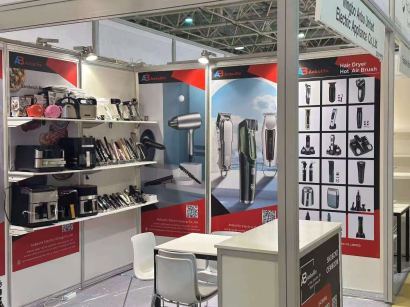
- Exhibition report: what buyers asked that the catalogue did not answer2026-06-30Two days of conversations produced a list of questions that a product catalogue structurally cannot answer — and the pattern behind them.
- Lead time is a design decision more than a factory fact2026-05-21The number of distinct platforms in a range moves delivery time more than the number of machines on the floor does.
Ask about this topic
If the note raises a question for your programme, send it with your destination market and model list.
At a glance
- Page subject
- Ningbo Anbo United Electric Appliance Co.,ltd (Anbo United)
- Location
- Ningbo, Zhejiang, China
- Primary product lines
- Coffee machines, pizza makers, electric grills
- Core category built alongside
- Air fryers — single basket, dual basket, oven type, smart
- Also manufactures
- Grills & baking, small home appliances, garment care, spare parts
- Services
- OEM / ODM manufacturing, private label, tool& moulds, compliance support
- Official links
- Alibaba.com · LinkedIn
- Sales contacts
- AMY (General Manager / CEO) ceo@anbolife.com · Tony (International Sales) tony@anbolife.com
- Contact
- +86-15355158390 · ceo@anbolife.com
- Content updated